
Design Guides
Front Door Hardware: Handle Sets, Locks, Finishes and What to Choose
Hardware is where a door's security, feel and style meet. Here is how handle sets, pull bars, deadbolts, mortise and multipoint locks and smart locks differ, what lock grades mean, and how to choose a finish.
By EHI Custom Doors
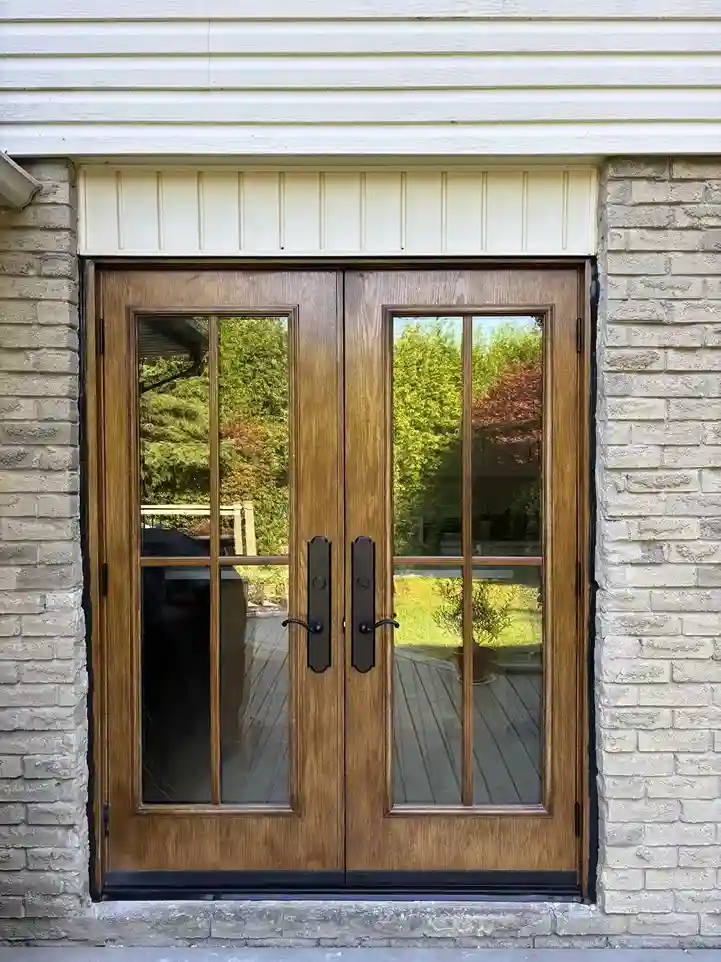
Key Takeaways
- Hardware is where security, feel and style meet, and it changes the price. Lock type and the handle set are two of the choices that move a quote.
- Handles come as knobs, levers, handle sets and pull bars. Locks come as single-point deadbolts, mortise locks and multipoint systems, with smart and keypad options.
- BHMA/ANSI Grade 1 is the top lock grade. Published summaries put a Grade 1 deadbolt at 250,000 cycles and ten hammer blows. Ask what grade a lock has.
- We offer satin nickel, oil rubbed bronze and matte black. Oil rubbed bronze is a living finish that changes with age.
- For a smart lock in a Canadian winter, use lithium batteries, keep a keyed backup, and check that the lock works with your door.
Front door hardware is the part of the door your hand touches every day and your guests notice first. It also does a lot of security work. This guide explains the parts, the handle and lock choices, what lock grades mean, and how to pick a finish that suits the door and holds up outside.
We are EHI Custom Doors. We manufacture and install custom fiberglass front doors and back doors with hardware in satin nickel, oil rubbed bronze and matte black, and lock options that include standard, mortise and multipoint systems.
The Parts of Door Hardware
| Part | What it does | Notes |
|---|---|---|
| Handle set | The handle or grip you use to open the door, often paired with a deadbolt | The most visible piece of hardware |
| Deadbolt | A bolt that slides into the frame at one point | A quality deadbolt with a 1-inch throw is police advice |
| Mortise lock | A steel-cased lock set into a pocket in the door edge | Strong and refined, and available on our back doors |
| Multipoint lock | Engages several points along the frame | Spreads force and pulls the door tighter to its seal |
| Hinges | Carry the weight of the door and let it swing | Tamper-proof hinges matter on outswing doors |
| Strike plate | The metal plate in the frame that receives the bolt | Long screws that reach the wall stud make it strong |
| Accessories | Kick plates, knockers, mail slots, doorbells and house numbers | Match the metal family of the handle set |
Handle Styles
- Knobs: round and traditional, common on classic homes
- Levers: push down to open and easy on the hand, which helps accessibility
- Handle sets: a grip with a thumb latch, usually paired with a deadbolt, and the classic entry look
- Pull bars: long vertical handles that give modern doors their signature line
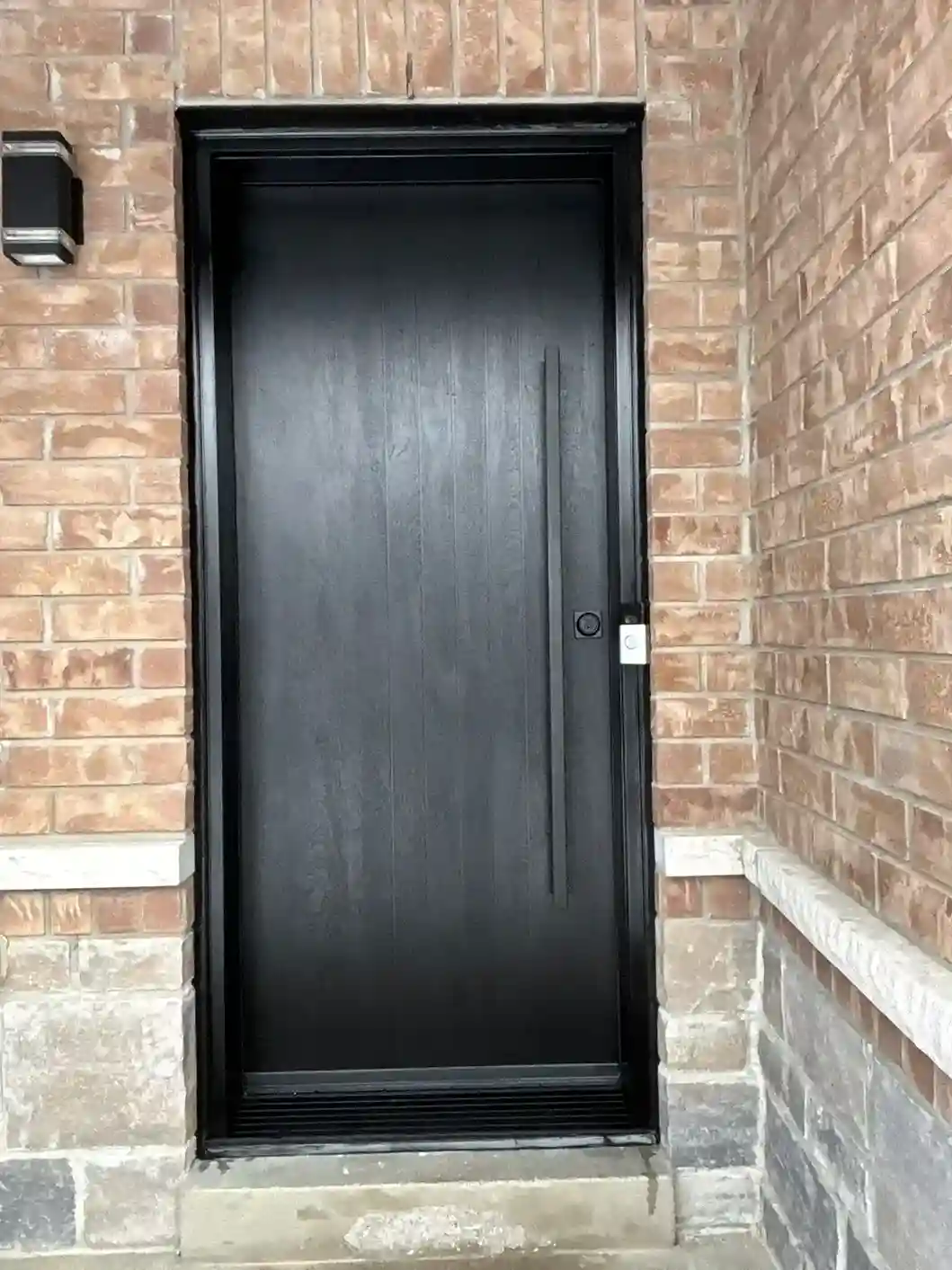
A pull bar needs its lock in the right place, so choose the two together. Our guide to modern front door ideas shows pull bars on flush and grooved doors, and our guide to front door styles for your home matches handle sets to traditional styles.
Lock Types: Deadbolt, Mortise and Multipoint
| Lock | How it works | Strength | Watch for |
|---|---|---|---|
| Single-point deadbolt | One bolt slides into the frame at the handle | Simple, familiar and widely available | The strike plate, screws and frame carry all the force |
| Mortise lock | A steel case sits inside the door edge and throws a bolt into the frame | Strong and refined | Needs a door built for it |
| Multipoint lock | A handle lift engages bolts or hooks at the top, middle and bottom | Spreads force along the door edge and pulls the door tight | More parts and a higher price, and smart lock options can be narrower |
Lock type is one of the things that moves the price, as our guide to custom exterior doors cost in Toronto explains. A lock is only as strong as the frame it bolts into, and our guide to front door security covers the frame, strike plate and glass.
Smart Locks and Keypads
Keypad and smart locks let you open the door with a code or a phone, share access and skip the key. They work well when chosen with Canadian winters in mind:
- Use lithium batteries. Standard alkaline batteries lose capacity in the cold, and lithium keeps working in far lower temperatures.
- Keep a keyed backup, so a dead battery never locks you out.
- Prefer a design with the batteries on the inside, away from freezing air.
- A door frame that has moved in the cold forces a motor to work harder, so a tight, square fit helps.
- Check compatibility. Not every smart lock fits a multipoint system, so ask before you order.
Lock Grades: What BHMA Grade 1, 2 and 3 Mean
Locks are graded under the ANSI/BHMA standards on cycle life, strength and security. Grade 1 is the highest. The figures below are commonly published summaries for residential deadbolts, so treat them as a guide and ask the maker for the grade of the exact lock.
| Grade | Deadbolt cycle life | Hammer blows to the bolt | Typical use |
|---|---|---|---|
| Grade 1 | About 250,000 | Ten | Highest duty, including commercial entries |
| Grade 2 | About 150,000 | Five | Heavy residential and light commercial |
| Grade 3 | About 100,000 | Two | Standard residential |
Finishes: Satin Nickel, Oil Rubbed Bronze and Matte Black
| Finish | Look | Pairs well with | Behaviour |
|---|---|---|---|
| Satin nickel | Soft, cool silver | Wood-grain and lighter doors, modern and transitional homes | Even and quiet |
| Oil rubbed bronze | Deep, warm dark brown | Traditional, Craftsman and stained wood-grain doors | A living finish that can darken, lighten or rub back with age |
| Matte black | Flat, graphic black | Black and dark doors, modern and farmhouse looks | Clean lines, and the finish system matters for durability |
Salt is hard on any hardware. De-icing salt and lake air can attack finishes, and bronze can develop corrosion in salty conditions. Ask whether a finish is plated, lacquered, PVD-coated or living, and what the maker says about exposure. Our hardware is not covered by the lifetime warranty unless stated separately, so read the warranty terms.
Matching Hardware to Your Door
- Modern flush door: a matte black or satin nickel pull bar
- Traditional paneled door: an oil rubbed bronze handle set
- Craftsman door: oil rubbed bronze or matte black, with a simple grip
- Farmhouse door: matte black
- Any door: the same metal family as the porch light and house numbers, and on every exterior door. See our guides to matching front and back doors and front door curb appeal.
Colour matters too. Our guide to front door colours covers pairing hardware with the door finish.
How to Choose Front Door Hardware
- Decide the handle style that fits the door: handle set, lever, knob or pull bar.
- Choose the lock type: single-point, mortise or multipoint.
- Ask for the lock grade, and choose Grade 1 or 2 for a front door.
- Pick a finish that suits the door, the porch light and the exposure.
- If you want a smart lock, plan for a keyed backup, lithium batteries and compatibility.
- Confirm the strike plate, screws and hinges on the quote.
Get a Quote With Your Hardware Choices
Browse the door catalogue and photos of doors we have installed to see hardware on real doors. Then call EHI Custom Doors at 647-952-2311 or request a quote. We are open Monday to Sunday, 9 AM to 5 PM, and there is no pressure to book on the spot. Read what customers say on our reviews page.
Good front door hardware is a match of handle, lock and finish to the door and the weather. Decide the lock first, then the handle, then the finish, and ask for the grade in writing.
Frequently Asked Questions
What is a handle set on a front door?
A handle set combines a grip with a thumb latch and is usually paired with a deadbolt. It is the classic entry look, and pull bars are the modern alternative.
What is the difference between a deadbolt and a multipoint lock?
A deadbolt secures the door at one point. A multipoint lock engages several points along the frame, spreads force along the door edge and pulls the door tighter to its seal. The frame around either lock still has to be solid.
What is a mortise lock?
It is a steel-cased lock set into a pocket in the edge of the door. It is strong and refined, and our back doors can be ordered with one.
What does Grade 1 mean on a lock?
It is the highest BHMA/ANSI grade. Published summaries put a Grade 1 deadbolt at about 250,000 cycles and ten hammer blows to the bolt. Ask the maker for the grade of the exact lock.
Are smart locks reliable in a Canadian winter?
They can be. Use lithium batteries, keep a keyed backup, choose a lock with batteries on the inside and make sure the door is square so the motor does not have to work harder.
What hardware finishes do you offer?
Satin nickel, oil rubbed bronze and matte black. Oil rubbed bronze is a living finish that can darken or rub back with age.
Does hardware change the price of a custom door?
Yes. Hardware and lock type are among the choices that change the final price. A custom fiberglass single door starts at $2,500 installed and a double door starts at $5,100.
Is hardware covered by the warranty?
Our lifetime warranty covers the fiberglass slab, frame and brickmould. Hardware, glass and installation labour are not covered unless stated separately.
Ready to See Real Pricing for Your Home?
Explore the pages below or request a free quote and we will get back to you with an accurate number.