
Buying Guides
Exterior Door Glass Options: Privacy vs Light
Glass brings daylight into your entry, and it also lets people look in. Here is how clear, frosted, textured and decorative glass compare on real exterior doors in Ontario, and how to choose for each door in your home.
By EHI Custom Doors
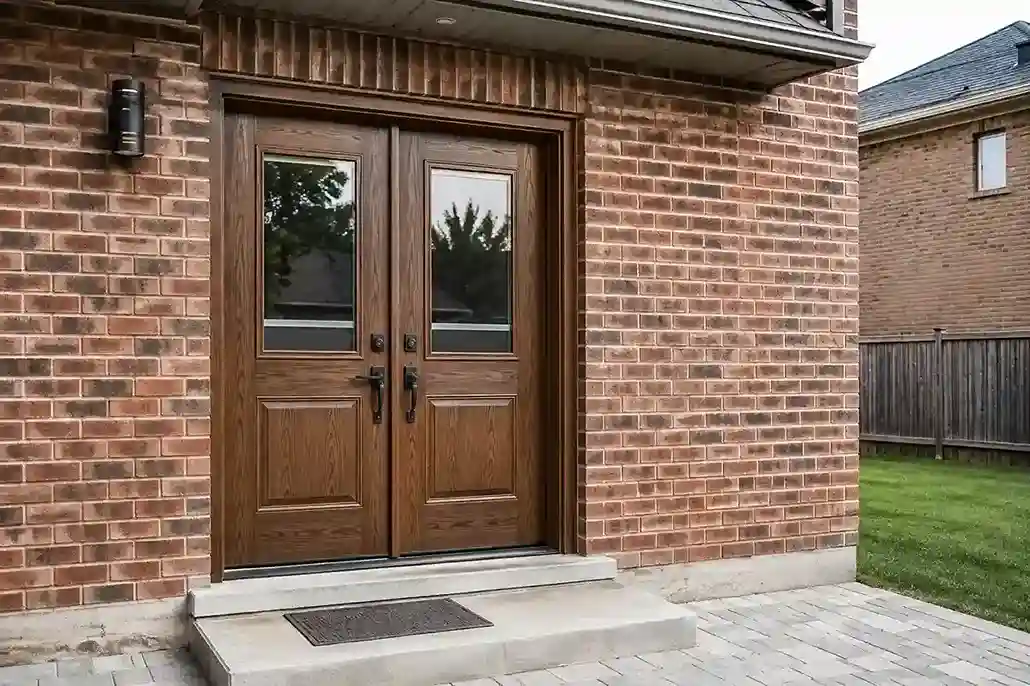
Key Takeaways
- Clear, frosted, textured and decorative glass sit on a scale from full view to full privacy. The right pick depends on where the door sits, not only on taste.
- A mix often works best: frosted or textured glass facing the street, clear glass at the back of the house.
- Clear glass reverses at night. With the lights on inside, people outside can see in.
- Glass affects heat loss and security as well as privacy. Ask about the glass unit, not only the pattern.
- At EHI Custom Doors, custom glass designs can add 1 to 2 weeks to the usual 4 to 6 week lead time.
Glass is the best thing you can add to an entry door and the hardest choice to get right. The right exterior door glass options bring daylight into a dark hall without letting the street see into your home. The wrong ones leave the blinds drawn all day. This guide compares clear, frosted, textured and decorative glass on real exterior doors, and shows how to choose for each door in your house.
We are EHI Custom Doors. We manufacture, supply and install custom fiberglass front doors and back doors from our workshop in Whitchurch-Stouffville. Advice written for interior French doors only covers half of this decision. An exterior door also faces the street, holds back the cold and has to resist forced entry.
Exterior Door Glass Options at a Glance
Glass in a door is called a lite. The four main choices sit on a scale from most view to most privacy, and every one of them still lets light through.
| Glass type | Privacy | Daylight | Works best on |
|---|---|---|---|
| Clear | Low | Highest | Back doors to a private yard, deep covered porches |
| Frosted | High | High | Front doors and sidelights facing the street |
| Textured (ripple, reed or rain patterns) | Medium to high, depending on the pattern | High | Traditional and Craftsman fronts, side doors |
| Decorative or patterned | Depends on how much clear glass is in the design | Medium to high | Statement front doors and sidelights |
The short answer
For a door that faces the street, choose frosted or textured glass, or a layout with the glass above eye level. For a back door onto a private yard, clear glass gives the most light and the best view. Most homes end up with a mix.
Why Glass Matters More on an Exterior Door
An interior French door only has to manage privacy between rooms. An exterior door has four more jobs.
- It faces the street or a neighbour, so the glass decides what strangers can see.
- It has to hold heat in through a Canadian winter, and glass is usually the coldest part of the door.
- It has to resist forced entry, and glass near a lock is a weak point.
- It has to meet the Building Code, which asks for safety glass in door glass that is large or low enough to be hit.
So choosing glass for an exterior door is a decision about privacy, energy and security at the same time. The sections below cover each one.
Clear Glass: Maximum Light, Minimum Privacy
Clear glass gives you the brightest entry and an open view of the yard. It is the natural choice for a back door onto a fenced yard or a French-style double door onto a deck, where nobody is looking in.
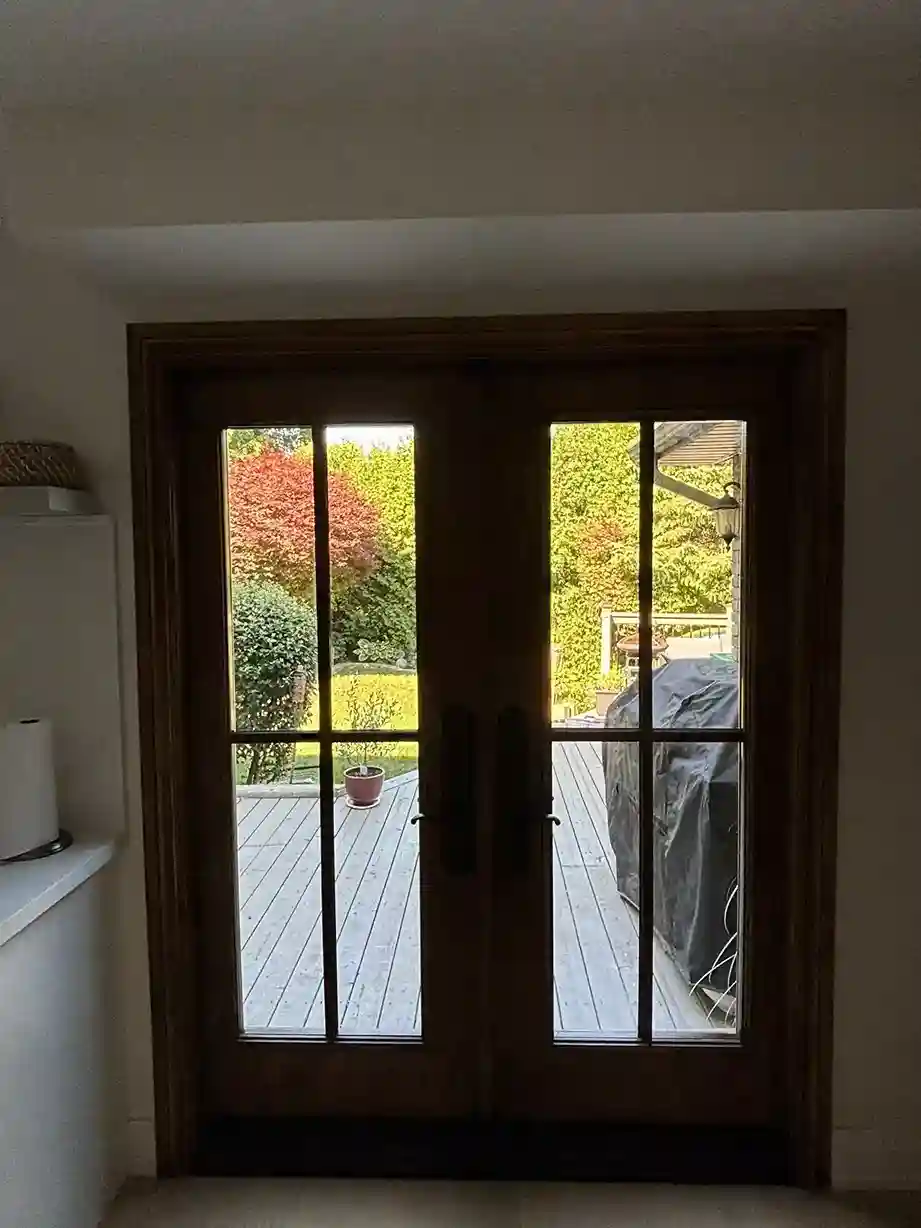
Clear glass has three catches on an exterior door. First, at night the privacy problem reverses. With the lights on inside and the dark outside, the glass works like a shop window. Second, a clear front door gives the street a view straight down your hall. Third, sun through large clear panes adds heat in summer. A solar-control Low-E coating helps with that, as the energy section below explains.
Frosted Glass: The Everyday Middle Ground
Frosted glass lets light in and blurs what is behind it. From outside, people see soft shapes and colour, not faces or furniture. That is why frosted glass is the usual answer for front doors and sidelights that face the street.
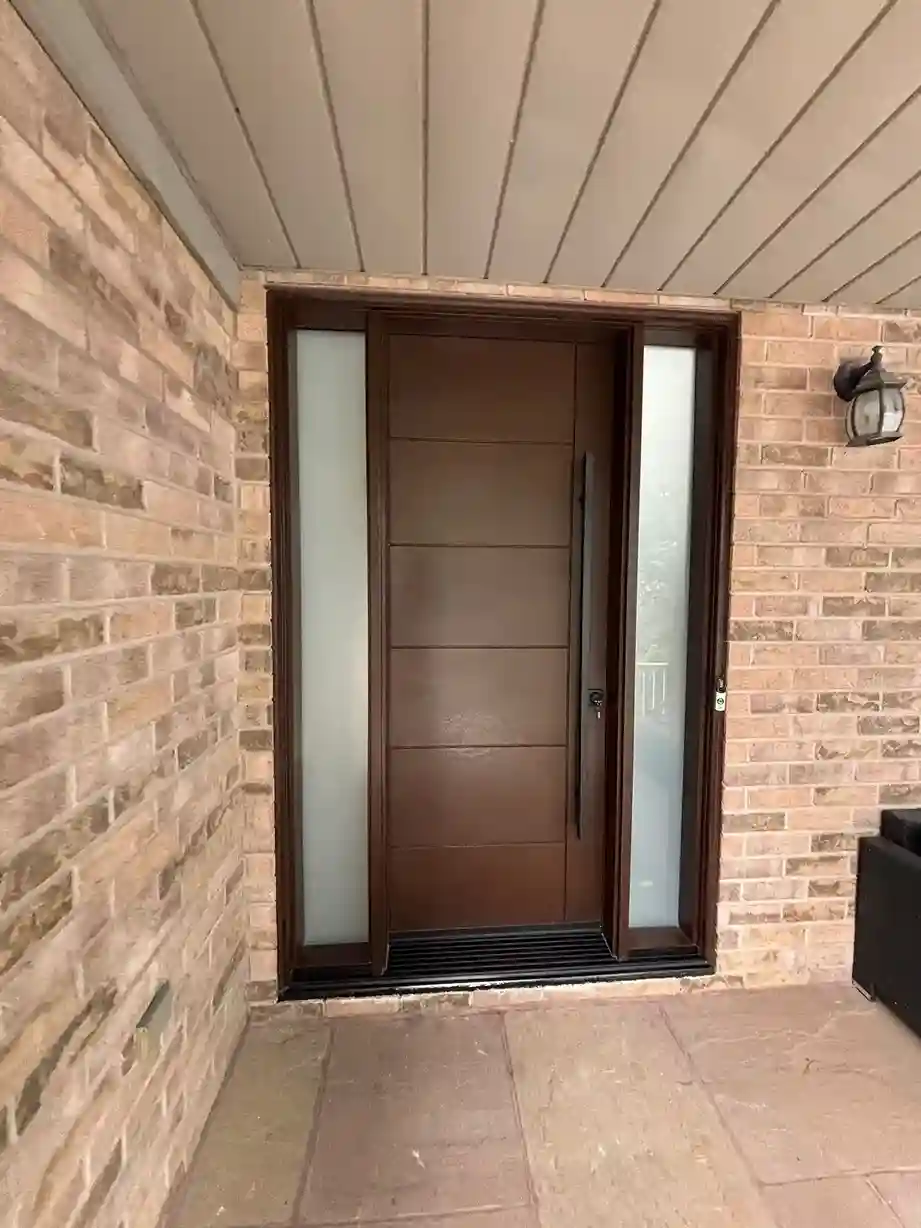
Two details matter. Frosting should cover the whole pane, because any clear area in a pattern lets more show through. And at night, interior lights make frosted glass glow, which looks warm from the street and still keeps the view private.
Textured Glass: More Privacy, Still Bright
Textured glass has a pattern pressed into the surface, such as ripples, reeds or rain-style lines. The pattern bends light, so shapes break up more than they do behind frosting, and the glass still looks bright from inside.
Patterns range from light texture to heavy. Heavier patterns give more privacy and a more traditional look, so they suit Craftsman and older-style fronts well. The pattern also changes how the door looks in daylight, so judge it on the door, not only in a sample.
Decorative Glass: Style First, Privacy Depends on the Pattern
Decorative glass adds a pattern, a scroll or a leaded-look design to the pane. It gives a front door a strong personality. Its privacy depends on how much clear glass the design leaves open. A dense pattern blocks a lot, and a light pattern with big clear gaps blocks very little.
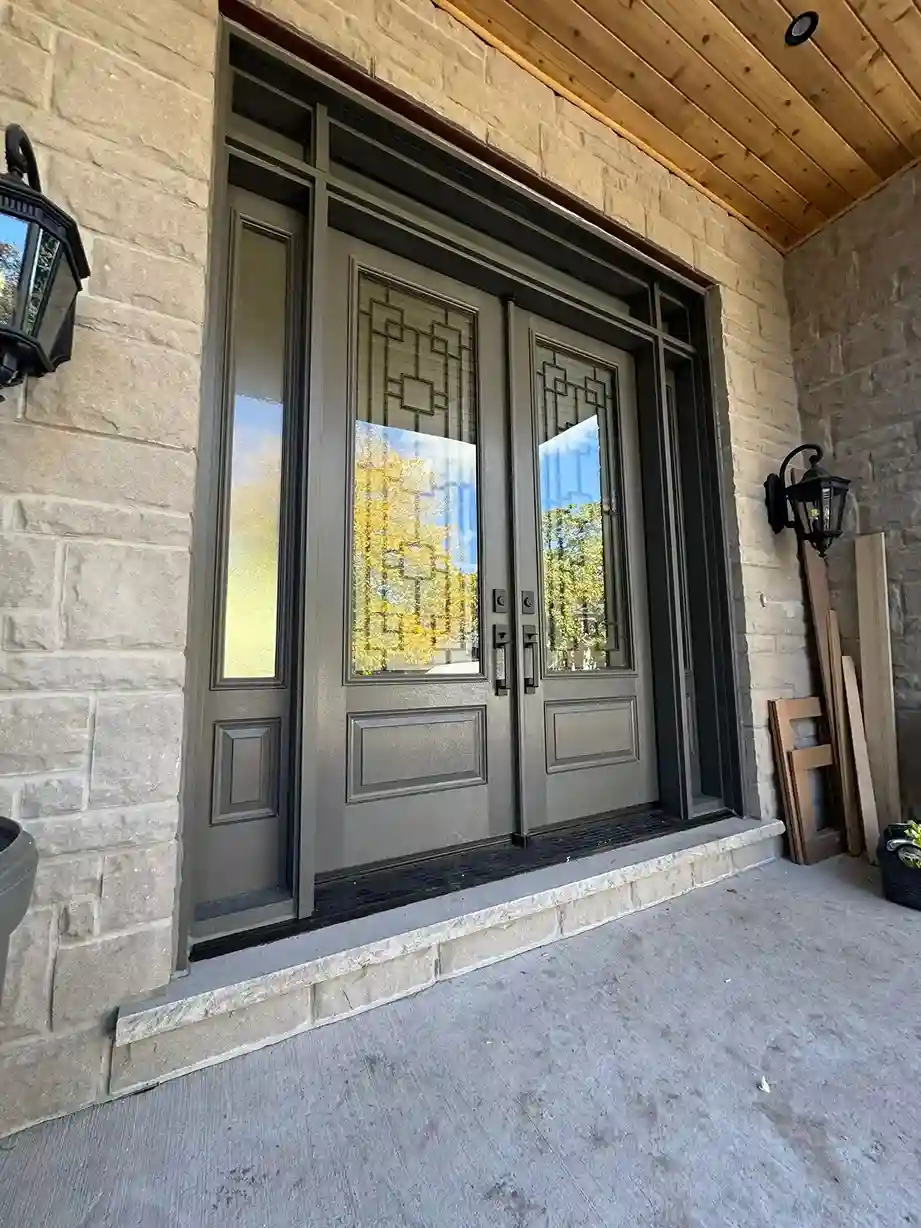
A common fix is to combine decorative glass with frosted or textured backing so the design shows but the view does not. You can see many combinations in photos of doors we have installed, and the door catalogue shows more styles. Customers also mention details such as modern stainless steel inserts in their reviews, which shows how far a door can go beyond a plain glass panel.
Door Layout Changes Privacy as Much as Glass Type
Where the glass sits changes what people can see, often more than the glass type does. Glass above eye level lets light in and shows almost nothing of your hall. Glass at eye level and below shows the most. Our guide to sidelights and transoms covers sizing and design.
| Door layout | What it does for privacy and light |
|---|---|
| Full-lite door | The most light and the most view. Pair it with frosted or textured glass on a street-facing door. |
| Three-quarter lite | Glass over the top two-thirds of the door. Lots of light, and the view depends on the glass type. |
| Half-lite | Glass in the top half. The solid lower panel blocks the low view-in. |
| Narrow vertical or horizontal inserts | A slice of light with very little view-in. |
| Transom above the door | Daylight from overhead. From the porch, almost nothing can be seen. |
| Sidelights | Extra daylight at the sides. Frosted sidelights keep the view blurred. |
Exterior French-Style Doors: Choosing Glass for the Back of the House
French-style exterior doors are a pair of hinged doors, each with a large glass panel. They suit decks and patios because they open wide and bring the yard into the room. Our custom back doors come in single and double configurations, with clear, privacy or decorative glass, and our back door replacement guide helps you choose between them. Our guide to exterior French doors goes deeper on how a pair works.
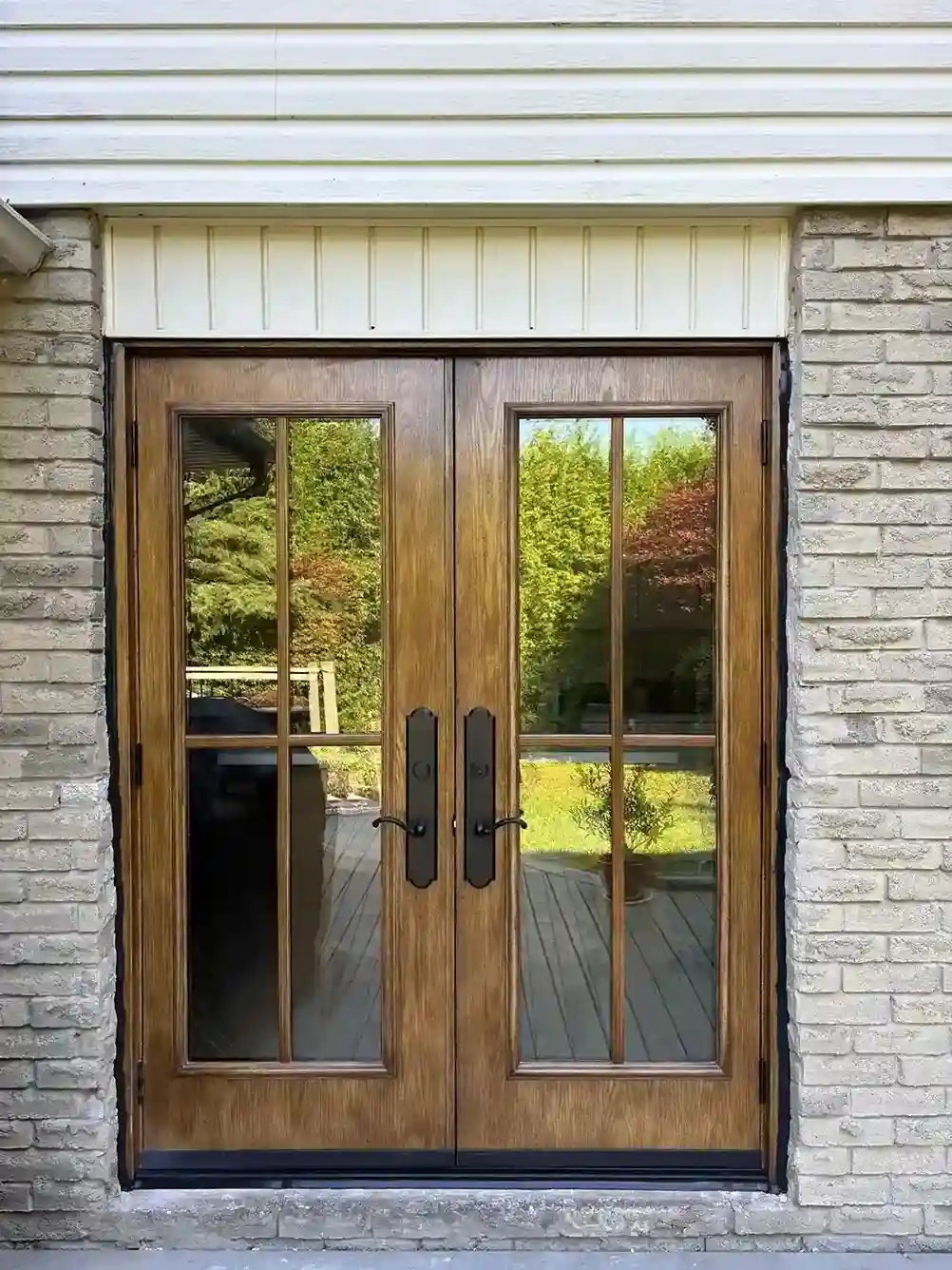
- Look at who can see the deck. A private fenced yard suits clear glass. A deck overlooked by a neighbour's upper window may call for frosted glass in the lower panes.
- Divided panes, such as the four-pane layout above, break up the sightline and add a traditional look.
- Keep both doors matched. Mixed glass on a pair of doors looks uneven from outside.
- Look at blinds between the glass. Some patio door models in our catalogue show blinds sealed between the glass panes, which gives privacy you can adjust.
- Think about the sun. West-facing glass doors collect afternoon heat, so ask about a solar-control coating.
Which Door in Your Home Needs What
Every entrance has a different audience. Use this table as a starting point, then adjust for your own street. Many Toronto semis and row houses sit close to the sidewalk, which pushes the front door toward more privacy.
| Which door | Privacy need | Suggested glass |
|---|---|---|
| Front door on a semi or row house near the sidewalk | High | Frosted or textured, or a half-lite with a solid lower panel |
| Front door on a deep covered porch or a large lot | Medium | Lightly textured or clear in the door, frosted sidelights |
| Front door sidelights | Medium to high | Frosted or textured, so light enters without a straight view into the hall |
| Transom above the door | Low | Clear or decorative, since it sits above eye level |
| Back door to a private, fenced yard | Low | Clear, for the most light and a full view of the yard |
| Back or side door facing a neighbour's window or a laneway | High | Frosted, textured, or a solid door with a narrow insert |
| French-style double doors to a deck | Medium | Clear on a private side, frosted if the deck is overlooked |
Light, Heat and Noise: What Glass Does to Your Comfort
In Toronto the shortest day has about nine hours of daylight, and the sun sets before 5 pm in December. Sidelights, a transom or a glass panel can make a dark entry hall feel brighter for the whole season. More glass also means more heat loss, so the glass unit matters.
Natural Resources Canada explains what sets one glass unit apart from another:
- Panes: double glazing has two panes and triple has three. More layers also reduce outdoor noise.
- Low-E coatings: transparent coatings that can reduce heat loss in winter and heat gain in summer by up to 50 percent. Passive types let solar heat in. Solar-control types keep it out.
- Gas fill: the space between panes is filled with an inert gas such as argon or krypton to slow heat transfer.
- Spacers: thermal-break spacers reduce heat loss at the glass edge compared with traditional aluminum ones.
- Solar heat gain coefficient (SHGC): a rating from 0 to 1. NRCan calls 0.3 to 0.4 optimal for new or heavily renovated homes in Canada.
Whatever pattern you pick, ask the maker to name the glass unit on your quote: the number of panes, the coating, the gas fill and the spacer. ENERGY STAR Canada certification, which asks doors for a U-factor of 1.22 W/m²K or lower or an Energy Rating of 34 or higher, is based on testing the whole door. Ask which rating belongs to the exact door and glass you are buying.
Security and Safety: What the Glass Has to Do
Frosted, textured and decorative glass change what people can see. They do not make a pane harder to break. Strength comes from the type of glass and the door around it.
- Safety glass: the Ontario Building Code sets a material standard for door glass, CAN/CGSB-12.1, which covers tempered and laminated safety glass. Large and low glass panels in and beside entrance doors need it.
- Tempered vs laminated: tempered glass is heat-treated and crumbles into small pieces when it breaks. Laminated glass has a plastic layer that holds the pieces together, so it takes longer to get through.
- Reach-through risk: glass close to the lock lets someone break a pane and reach in. A half-lite, a narrow insert or sidelights set back from the handle reduce the chance.
- The lock: EHI doors can be built with a multipoint lock system that secures the door at several points along the frame.
Ask about glass coverage
Our lifetime warranty covers the fiberglass slab, frame and brickmould. Glass is not covered unless stated separately. Fogging between the panes usually means a failed seal, so ask any maker, us included, what protects you if a glass unit fails.
What Glass Adds to the Price and the Wait
At EHI Custom Doors, single doors start at $2,500 installed and double doors start at $5,100 installed. Glass is one of the four things that move the final price, along with size, finish and hardware. More glass, larger panes and custom decorative designs generally cost more than a standard privacy pattern.
Glass also affects the timeline. Our standard lead time is 4 to 6 weeks from a confirmed order. Custom glass designs that are not readily available can add 1 to 2 weeks. If the design is settled early, that wait is easier to plan around. Our fall door replacement guide shows when to confirm an order to be installed before winter, and custom exterior doors cost in Toronto shows what the price includes.
How to Choose the Right Glass for Each Door
- Stand on the sidewalk or in your yard at dusk with the lights on inside. Note what you can see through the door you have now.
- List who can see each door: the street, a neighbour's window, a laneway or only your own fence.
- Set a privacy level for each door. Front and side doors usually need more than a back door onto a private yard.
- Pick the glass type for that level, then adjust the layout. A half-lite, narrow inserts or a transom can solve what glass type alone cannot.
- Match the glass to the style of the house. Frosted panels suit modern flush doors, and divided or patterned glass suits Craftsman and traditional fronts.
- Confirm the glass unit, the safety glass and what the warranty covers before you approve the quote.
Heritage homes may add a step. If your home is designated, the look of the door, glass included, can be part of what the City reviews. Our guide on custom doors vs stock doors explains how Toronto's permit and heritage rules work for a door replacement.
Get a Glass Plan for Your Doors
The easiest way to settle glass is to look at doors that already suit a home like yours. Browse the catalogue and the gallery, then send us photos of your entrances. Call EHI Custom Doors at 647-952-2311 or request a quote. We are open Monday to Sunday, 9 AM to 5 PM, and we serve Toronto and the GTA.
Exterior door glass options come down to one question for each door: who can see it, and how much of the outside do you want to see? Answer that door by door, and the choices get simple.
Frequently Asked Questions
What is the best glass for a front door that needs privacy?
Frosted or textured glass is the usual answer. Both let daylight through and blur what is behind them. A half-lite, where a solid lower panel blocks the low view-in, or a transom above the door, gives privacy with a different layout.
Can people see through frosted glass at night?
Not clearly. Full-coverage frosted glass blurs the view even with the lights on. Interior lights make the glass glow, and any clear area in a pattern will show more, so choose frosting that covers the whole pane.
Is clear glass a security risk on an exterior door?
Clear glass lets people see into your home, and any glass close to the lock can be broken to reach the handle. Laminated glass holds together longer than tempered glass, and glass set back from the lock lowers the risk. EHI doors can be built with a multipoint lock system.
What glass works best for exterior French-style doors?
Clear glass suits a private fenced yard. If a neighbour's window overlooks the deck, use frosted glass in the lower panes. Divided panes add a traditional look and break up sightlines. Keep both doors matched.
Does door glass affect energy efficiency?
Yes. Natural Resources Canada says the number of panes, Low-E coatings, gas fills and spacers all change how much heat a glass unit loses. Ask the maker to name the glass unit on your quote and the tested rating for the whole door.
Does decorative glass give privacy?
It depends on the pattern. A dense design blocks much of the view, and a light design with large clear areas blocks very little. Pairing decorative glass with a frosted or textured backing keeps the design and the privacy.
How much does glass add to the price of a custom door?
At EHI Custom Doors, single doors start at $2,500 installed and double doors start at $5,100 installed. Glass is one of the factors that move the final price, along with size, finish and hardware. Custom glass designs can add 1 to 2 weeks to the 4 to 6 week lead time.
Do sidelights and transoms need privacy glass?
Sidelights usually do, because they sit at eye level beside the door. A transom sits above eye level, so clear or decorative glass works there without exposing the hall.
Ready to See Real Pricing for Your Home?
Explore the pages below or request a free quote and we will get back to you with an accurate number.