
Replacement Guides
When to Replace an Exterior Door: Signs and the Repair vs Replace Test
A worn seal can be fixed. A failed door cannot. Here are the signs that tell them apart, a simple repair vs replace test, and a 10-minute check you can do at home today.
By EHI Custom Doors
Key Takeaways
- Repair a sound door when only a wear part has failed, such as a seal, sweep, hinge or finish. Replace when the door, frame or sill is damaged, or the same problem keeps coming back.
- The strongest signs are a draft that returns after a new seal, warping, soft or rotted wood, cracks that reach the core, water at the sill and break-in damage.
- You can test at home: look for daylight, run an incense-smoke draft test on a cold windy day, compare the gaps, and press the wood with a screwdriver tip.
- Frost on the inside of a door can come from indoor humidity as well as the door, so look at your windows too.
- At EHI Custom Doors, replacement starts at $2,500 for a single door and $5,100 for a double, installed, with a 4 to 6 week lead time, so start before the cold arrives.
Knowing when to replace an exterior door comes down to one question: is the problem a worn part or a failed door? A worn seal, a loose hinge or a scratched finish can be fixed while the door stays. A warped slab, a soft frame or a draft that returns after a new seal means the door itself has reached the end. This guide gives you the signs, a repair vs replace test and a 10-minute check you can do today.
We are EHI Custom Doors. We manufacture and install custom fiberglass front doors and back doors, so replacement is what we do. We will also tell you when the honest answer is a new seal and not a new door.
The Quick Test: Repair or Replace?
Repair when the door and frame are square, solid and dry, and only a wear part has failed. Replace when the door, frame or sill is damaged, or the same problem keeps coming back. This table sorts the common symptoms.
| What you see | Usually | Why |
|---|---|---|
| Worn weatherstripping or a tired door sweep | Fix the part | Seals are wear parts on an otherwise sound door |
| Loose hinge screws, a rubbing latch or a loose handle | Fix or adjust | The door and frame are fine, the hardware has shifted |
| A faded or scratched finish | Refinish | The damage is cosmetic |
| Sticks only in humid weather and the frame is still square | Adjust | Seasonal swelling, not damage |
| A draft or daylight that returns after a new seal | Replace | The frame or slab no longer sits square |
| A warped or bowed door that will not seal | Replace | A warped slab cannot be straightened reliably |
| Soft, spongy or rotted wood at the sill, jamb or bottom edge | Replace | Rot holds moisture and keeps spreading |
| Cracks or delamination that reach the core | Replace | Water reaches the core and the insulation is lost |
| Rust through, or deep dents on a steel door | Replace | The skin is broken and rust keeps going |
| A frame split near the lock after a break-in | Replace | A patched frame stays weak |
A simple rule of thumb
If you have fixed the same door twice, or a repair will not change how the door seals, put that effort toward a replacement instead.
Signs It Is Time to Replace an Exterior Door
These nine signs point to a door problem, not a part problem. One is often a warning. Two or three together usually mean replacement.
Drafts and daylight that stay after a new seal
Natural Resources Canada says windows, doors and skylights together can account for up to 35 percent of a home's heat loss, and that a poorly installed product can cause cold drafts even when the product itself is efficient. If you renew the weatherstripping and the draft or the daylight comes back, the seal was not the problem. The door or the frame has moved. More street noise coming through the door usually goes with it.
A door that warps, bows or sticks
A door that only sticks in a humid week may just need an adjustment. A door that stays bowed, will not latch, or rubs the frame all year has changed shape, and a bent slab does not seal.
Soft, rotted or cracked wood
Water collects at the bottom edge, the sill and the lower jamb. Press a screwdriver tip gently into those spots. Wood that gives way or sounds hollow has rot, and rot spreads out of sight. Solid composite fiberglass does not rot, which is one reason we build the slab, frame and brickmould from it, as our guide to the advantages of fiberglass doors explains.
Cracks, delamination, dents or rust
Surface scratches are cosmetic. A crack through a fiberglass skin that reaches the foam core, a skin that has lifted from the core, or rust that has broken through a steel door all let water in and take insulation out. At that point replacement is the fix that lasts.
Water stains or leaks at the sill
Stains on the floor, a damp threshold after rain or snowmelt, or lifting flooring near the door mean water is getting past the door or the sill. Find out early, because water damage behind the trim costs more the longer it runs.
Frost, ice or condensation on the inside
Frost on the inside of a door on a very cold morning can mean the door is poorly insulated. It can also mean your indoor air is humid. Check the windows next to the door. If only the door frosts up while the windows stay clear, the door is the weak point.
Break-in damage or hardware that will not stay aligned
A split frame near the lock, a strike plate that keeps working loose, or a deadbolt that no longer lines up are security problems. A lock is only as strong as the frame it bolts into, so a damaged frame is a reason to replace.
Heating bills that keep climbing
Many things raise a heating bill, so do not blame the door on this sign alone. Combined with a draft, frost or a gap you can see, it points to the door. We do not promise a specific saving, because it depends on your home.
A door that no longer suits your home
This is not a failure, but it is a fair reason. New siding, windows or landscaping can leave an old door looking out of place. Browse the door catalogue and photos of doors we have installed to see what suits a home like yours.
What Failure Looks Like by Door Material
| Existing door | Common signs it has failed |
|---|---|
| Wood | Swelling and sticking, rot at the bottom edge and sill, peeling or cracked finish, and gaps that open as wood shrinks in dry winter air |
| Steel | Dents that break the surface and let rust start, rust at the bottom edge and threshold, and frost on the inside face in a cold snap |
| Fiberglass | Cracks through the skin, delamination from the core, heavy fading, and worn hardware. Fiberglass does not rot or rust. |
| Older vinyl-clad or composite | Cladding that has warped, split or discoloured, and a slab that no longer closes tight |
Choosing a material for the replacement? Our guide to fiberglass vs wood vs steel doors compares all three for Ontario homes.
How to Check Your Door in 10 Minutes
- Look for daylight. Stand inside on a bright day with the lights off. Any daylight at the edges is a gap.
- Run a draft test. On a cold, windy day, hold two or three incense sticks together near the edges, the threshold and the frame. Natural Resources Canada explains that leaks make the smoke move, trail away or make the tips glow.
- Compare the gaps. The gap between door and frame should be even along the top and both sides. A gap that narrows toward one corner means the door or frame has moved.
- Press the wood. Push a screwdriver tip gently into the bottom of the frame, the sill and the lower edge of a wood door. It should not sink in.
- Open and close it slowly. Watch for rubbing, sticking and a latch that no longer meets its strike plate.
- Check the inside face in cold weather for frost or damp patches, and note whether nearby windows do the same.
- Look at the floor and sill after heavy rain or snowmelt for stains or moisture.
Take photos of anything you find. They help us give you a real answer and a quote from your couch, and you can send them with your first request through our contact page.
What You Can Fix and What You Cannot
On a sound door, these small jobs are reasonable:
- New weatherstripping and a new door sweep
- Tightening or shimming loose hinges and lining up the strike plate
- Touching up or refinishing a worn surface
- Swapping a worn handle set
These are jobs for a handyman or a general contractor. We build and install replacement doors. The problems below are past a small fix:
- A warped or bowed slab
- A rotted, split or soft frame or sill
- A skin cracked through to the core
- Water that keeps returning after it has been sealed once
- A damaged frame around the lock
Why Toronto Doors Wear Out Faster
Doors in the GTA deal with humid summers, hard freezes, repeated freeze-thaw cycles, and road salt and slush that collect at the threshold. Homes along the lake, such as those in The Beaches and the Scarborough Bluffs, also take wind and spray. A door facing the weather with no porch cover ages fastest.
If your home is heritage-designated, get the replacement approved before you order. Our guide on custom doors vs stock doors explains the City of Toronto permit and heritage rules.
What Replacement Involves
At EHI Custom Doors, a custom fiberglass single door starts at $2,500 installed and a double door starts at $5,100 installed. These are starting prices, and our guide to custom exterior doors cost in Toronto shows what moves the final number.
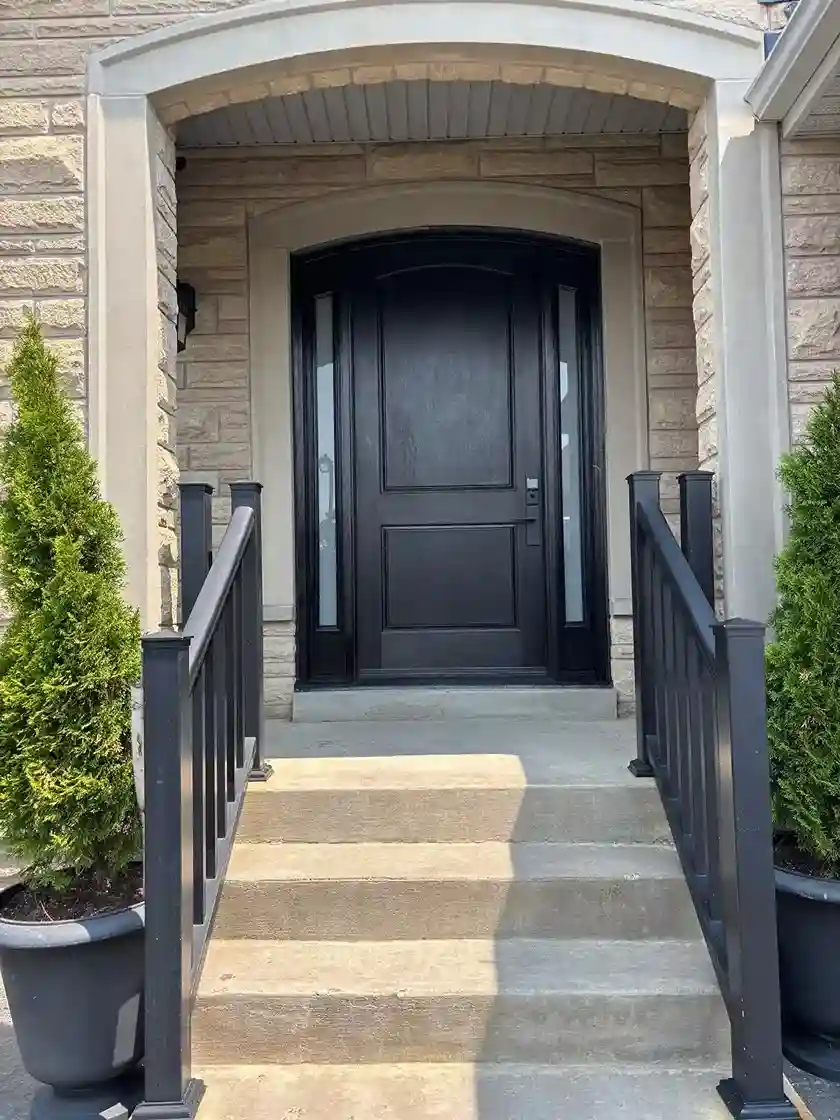
If your existing frame is square and solid, a new door can go into it. If the frame is warped or damaged, both should be replaced, which raises the price with size and hardware. We build the frame and slab as a matched set, so the problem does not come back, and our guide to replacing a front door and frame shows how to tell if yours can stay. The standard lead time is 4 to 6 weeks from a confirmed order, plus 1 to 2 weeks for custom glass.
Should You Wait?
Do not wait if the door will not lock, water is getting in, the frame is soft or the door has security damage. Plan ahead if the door is sound and the reason is style or a small draft. Because a custom door takes weeks to build, start early. Our fall door replacement guide shows when to confirm an order to have the door in before winter.
Get an Honest Assessment
Send photos of the door, the frame and the sill, inside and outside. Call EHI Custom Doors at 647-952-2311 or request a quote. We are open Monday to Sunday, 9 AM to 5 PM, and there is no pressure to book on the spot. You can also read what customers say in our reviews.
When to replace an exterior door is easier to decide with the facts in front of you. Run the 10-minute check, compare it with the table, and if the door has failed, ask for a real price in writing.
Frequently Asked Questions
How do I know if my front door needs to be replaced?
Look for a draft or daylight that returns after a new seal, a warped or sticking door, soft or rotted wood, cracks that reach the core, water at the sill, frost on the inside, or damage to the frame near the lock. Two or three of these together usually mean replacement.
Should I repair or replace my exterior door?
Repair when the door and frame are square, solid and dry and only a seal, sweep, hinge or finish has worn out. Replace when the door, frame or sill is damaged or the same problem keeps coming back.
How long do exterior doors last?
It depends on the material, the exposure and the installation. Fiberglass is durable for decades with occasional cleaning. Wood needs regular refinishing and can warp or rot, and steel can dent and rust.
Can I replace my door and keep the existing frame?
Yes, in most cases. If the frame is square and solid, a new door can be installed into it. If the frame is warped or damaged, replace both, which raises the price based on size and hardware.
Why is my door still drafty after new weatherstripping?
The seal was not the cause. The slab is likely warped or the frame has moved out of square, so the gap keeps returning. A draft test with incense sticks on a cold, windy day shows where the air is coming through.
Why is there frost on the inside of my front door?
It can come from a poorly insulated door, from high indoor humidity, or both. If nearby windows stay clear and only the door frosts, the door is the likely cause.
Do I need a permit to replace a door in Toronto?
Not when you replace a door in the same opening of a detached, semi-detached or row house with one dwelling unit, and the opening's size, location and structure stay the same. A changed opening or a heritage property is different, so check with the City of Toronto first.
How long does replacement take?
At EHI Custom Doors the standard lead time is 4 to 6 weeks from a confirmed order. Custom glass that is not readily available can add 1 to 2 weeks. Installation is booked once the door is ready.
Ready to See Real Pricing for Your Home?
Explore the pages below or request a free quote and we will get back to you with an accurate number.