
Buying Guides
Fiberglass Door Care and Maintenance: A Year-Round Checklist for Ontario Homes
Fiberglass is low maintenance, not no maintenance. Here is what to clean, check and adjust each season, how the finish ages in the sun, and how to protect a door from salt, snow and heat.
By EHI Custom Doors
Key Takeaways
- Fiberglass does not rot, rust or need sanding, but it still needs a yearly wash, a look at the seals, and some care for the hardware and the finish.
- Clean with mild soap and water, rinse and dry. Skip abrasive pads, harsh solvents and pressure washers.
- Check the weatherstripping, the sweep and the threshold each fall. Natural Resources Canada suggests testing for drafts on a cold, windy day with incense smoke.
- Guidance on the clear finish varies widely, from every few months in full sun to many years in the shade. Ask your maker what your door needs.
- Talk to your maker before you fit a storm door or choose a very dark colour on a sunny porch, since trapped heat can harm a door and may affect the warranty.
Fiberglass door care takes a few minutes a season. The material does not rot, swell or rust the way wood and steel can, so the work is short. It is not zero, though. Dirt, salt, sun and worn seals still shorten the life of a good door. This guide gives you a year-round checklist for Ontario homes. It explains how to clean and protect the finish, and what to check on the parts around the slab.
We are EHI Custom Doors. We manufacture and install custom fiberglass front doors and back doors. We say the same to every customer: low maintenance, not zero maintenance.
What Fiberglass Does and Does Not Need
| Task | How often | Why |
|---|---|---|
| Wash the slab, frame and glass | At least once a year, more often near salt or dust | Dirt and salt wear the finish and the seals |
| Check the weatherstripping, sweep and threshold | Every fall, and again if you feel a draft | Worn seals cause drafts and let in water |
| Check and lubricate the hinges and lock | Once or twice a year | Keeps the door swinging true and the lock smooth |
| Look at the finish | Once or twice a year, more in full sun | The clear finish is the layer that takes the sun |
| Check the caulk and the sill | Every year | Water gets in at cracked sealant |
| Sand, scrape or repaint | Not on a routine schedule | Fiberglass does not need the sanding and re-staining cycle of bare wood |
For a full comparison of the materials, read our guides to the advantages of fiberglass doors and to fiberglass vs wood vs steel doors.
How to Clean a Fiberglass Door
- Wipe off loose dirt and cobwebs with a dry, soft cloth.
- Wash the slab, frame and brickmould with dish soap in warm water and a soft cloth or sponge.
- Rinse with clean water from a hose on a gentle setting, or with a wet cloth.
- Dry the door with a clean cloth so water does not sit on the finish or in the panel edges.
- Clean the glass last, with a glass cleaner, keeping it off the finish and the seals.
Masonite, a door maker, advises cleaning fiberglass with dish soap and water or a baking soda mixture, and drying it completely. Avoid abrasive pads and harsh solvents, which can dull a finish, and keep a pressure washer away from the door, since it can drive water past the seals. Check your warranty for the maker's own cleaning rules.
Weatherstripping, Sweep and Threshold
Seals fail slowly, so check them on a schedule. Close the door and look for daylight around the edges. Run a finger along the weatherstripping for flat spots, cracks and gaps. Make sure the sweep touches the threshold without dragging. Look for a threshold that is cracked or loose.
Natural Resources Canada describes a simple test. Hold two or three lit incense sticks together near the door, including the threshold and the frame. Powerful leaks make the smoke dissipate and the tips glow, and slower leaks make the smoke trail away. It is easier to find leaks on a cold, windy day. Our guide to energy efficient entry doors explains what to do about drafts.
Hinges, Lock and Hardware
- Tighten loose hinge and strike plate screws. A door that starts to sag or stick often needs only this.
- Lubricate hinges and the lock with a silicone-based product, which many suppliers suggest, and wipe off the excess.
- Wipe handle sets with a damp cloth. Skip polish and harsh cleaners on coated finishes.
- Watch the lock. If the deadbolt is hard to turn, check that the door is not sagging before you replace the lock.
Hardware is worn by daily use, and our lifetime warranty on the fiberglass slab, frame and brickmould does not cover hardware, glass or labour. Our guides to front door hardware and front door security cover replacing handle sets and strengthening the strike plate.
The Finish: What to Expect and What to Watch
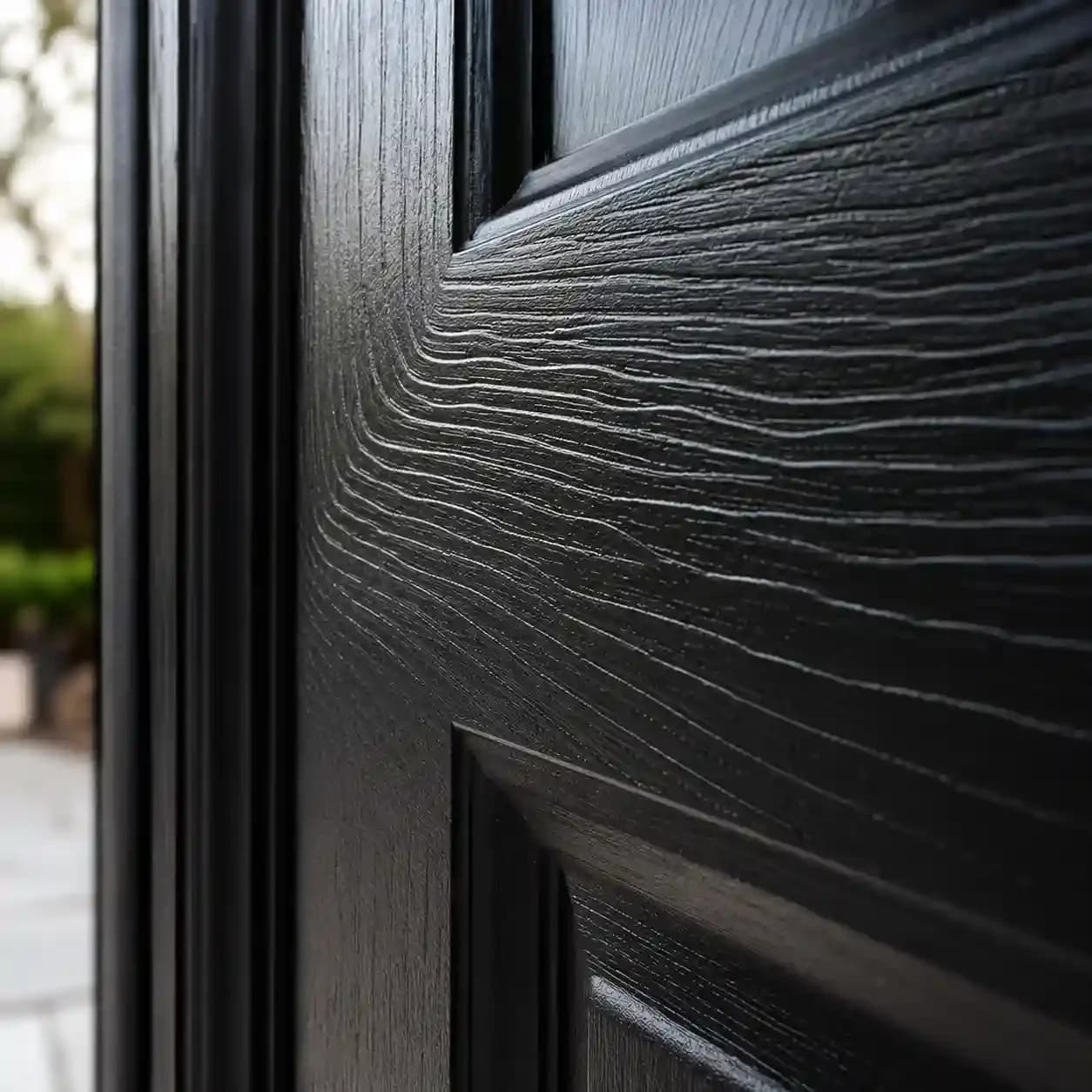
The colour on a fiberglass door sits in a finish, and the top layer takes the sun. This is where advice from door makers differs the most. Masonite says to reapply the topcoat on fiberglass every year if the door gets direct sun or a lot of moisture, and otherwise refinish about every two years. Framewell reports manufacturer guidance of about every two years on a somewhat shaded door and as often as every six months in full sun. Our own FAQ says fiberglass holds up for decades and the finish may need refreshing after many years of sun exposure.
The numbers differ because finish systems differ, and so does the sun on your porch. Ask us how your door's finish should be cared for, and get the answer in writing. Our guide to wood grain fiberglass doors explains the layers in more detail.
- Dull or cloudy patches, especially on the side that gets the most sun
- Colour that has lightened unevenly in the grain or panels
- A rough or chalky feel where the surface was smooth
- Bare-looking spots where the top layer has worn away
Catch these early. A thin refresh over a sound finish is a small job, and waiting until the finish has failed makes it a bigger one. Ask us before you buy any product to put on the door.
Sun, Heat and Storm Doors
Sun and heat are the biggest threat to a finish. Framewell suggests shade from a deep overhang or awning and a light colour where you can. If you fit a storm door, it suggests a ventilated low-E one, because heat that builds up between the two doors can damage the finish. It adds that most warranties set limits on warp, colours and storm doors. Coverage may be denied if a door goes past them.
Before you add a storm door or choose black
Ask us first. A very dark colour on a south or west porch with no overhang, or a storm door that traps heat, can stress any door. We can tell you what suits your porch, and we would rather you ask than find out later.
Winter Care: Salt, Snow and Ice
- Rinse salt and slush off the threshold, the lower part of the slab and the hardware, since salt can corrode metal and stain a finish.
- Clear snow and ice from the sill and the sweep so the door can close and seal.
- Do not chip ice off the door or frame with a metal tool. Use a plastic scraper or wait for it to melt.
- Check the seals in the fall, before the cold arrives, not in January.
- If a door starts to stick in winter, look for ice in the threshold first.
A Year-Round Checklist
| Season | What to do |
|---|---|
| Spring | Wash the door, frame and glass to remove salt. Check the finish, the caulk and the sill for winter damage. |
| Summer | Look at the finish on the sunniest side. Check the door still closes smoothly in humid weather. Clean the glass. |
| Fall | Check the weatherstripping, sweep and threshold. Test for drafts. Tighten hinges and lubricate the lock. See our guide to fall door replacement if a seal problem turns out to be bigger. |
| Winter | Rinse off salt. Keep the sill and sweep clear of snow and ice. Watch for a door that sticks or a draft that returns. |
When Care Is Not Enough
Care fixes worn seals, loose screws and a tired finish. It does not fix a cracked slab, a frame that has moved or a door that will not seal after new weatherstripping. We replace doors and do not repair them. If the problem is bigger than a clean and an adjustment, our guides on when to replace an exterior door and on replacing a front door and frame show how to decide.
Questions About Your Door?
If you have a question about caring for a door you own, or you want a new one, call EHI Custom Doors at 647-952-2311 or request a quote. We are open Monday to Sunday, 9 AM to 5 PM. You can browse the door catalogue and photos of doors we have installed, and read what customers say on our reviews page. A custom fiberglass single door starts at $2,500 installed and a double door at $5,100.
Fiberglass door care comes down to a yearly wash, a fall check of the seals and hardware, and a watchful eye on the finish. Do those things and your door will look and work well for a long time.
Frequently Asked Questions
How do I clean a fiberglass door?
Wash it with dish soap in warm water and a soft cloth, rinse with clean water and dry it. Avoid abrasive pads, harsh solvents and pressure washers, and check your warranty for the maker's cleaning rules.
How often should I clean my fiberglass door?
At least once a year, and more often if it sits near salt, dust or heavy pollen. Rinse salt off in winter and again in spring.
Do fiberglass doors need to be painted or stained again?
Not on a routine schedule, since fiberglass does not need the sanding and re-staining cycle of bare wood. The clear finish on top faces the sun, and guidance on refreshing it varies from every few months in full sun to many years in the shade. Ask your maker.
Can I use a pressure washer on a fiberglass door?
We advise against it. A pressure washer can drive water past the seals and damage the finish. Use a hose on a gentle setting, or a wet cloth.
How do I check my door for drafts?
Close the door and look for daylight around the edges. Natural Resources Canada suggests holding lit incense sticks near the door, threshold and frame on a cold, windy day. If the smoke trails away or dissipates, there is a leak.
Can I put a storm door on a fiberglass door?
Ask your maker first. Heat trapped between a storm door and an entry door can damage the finish, and warranties may limit storm doors. A ventilated storm door is the usual advice, but check before you buy.
Does road salt damage a fiberglass door?
Fiberglass does not rust, but salt can corrode metal hardware and stain a finish. Rinse the threshold, the lower slab and the hardware after salty weather.
What does the warranty cover?
Our lifetime warranty covers the fiberglass only, meaning the slab, frame and brickmould. Hardware, glass and labour are not part of it, and the finish is yours to look after.
Ready to See Real Pricing for Your Home?
Explore the pages below or request a free quote and we will get back to you with an accurate number.