
Design Guides
Wood Grain Fiberglass Doors: How the Wood Look Is Made and How to Choose It
A good wood grain fiberglass door looks like wood from the street and behaves like fiberglass in the weather. Here is how the grain is made, how oak and mahogany differ, and what to check before you order.
By EHI Custom Doors
Key Takeaways
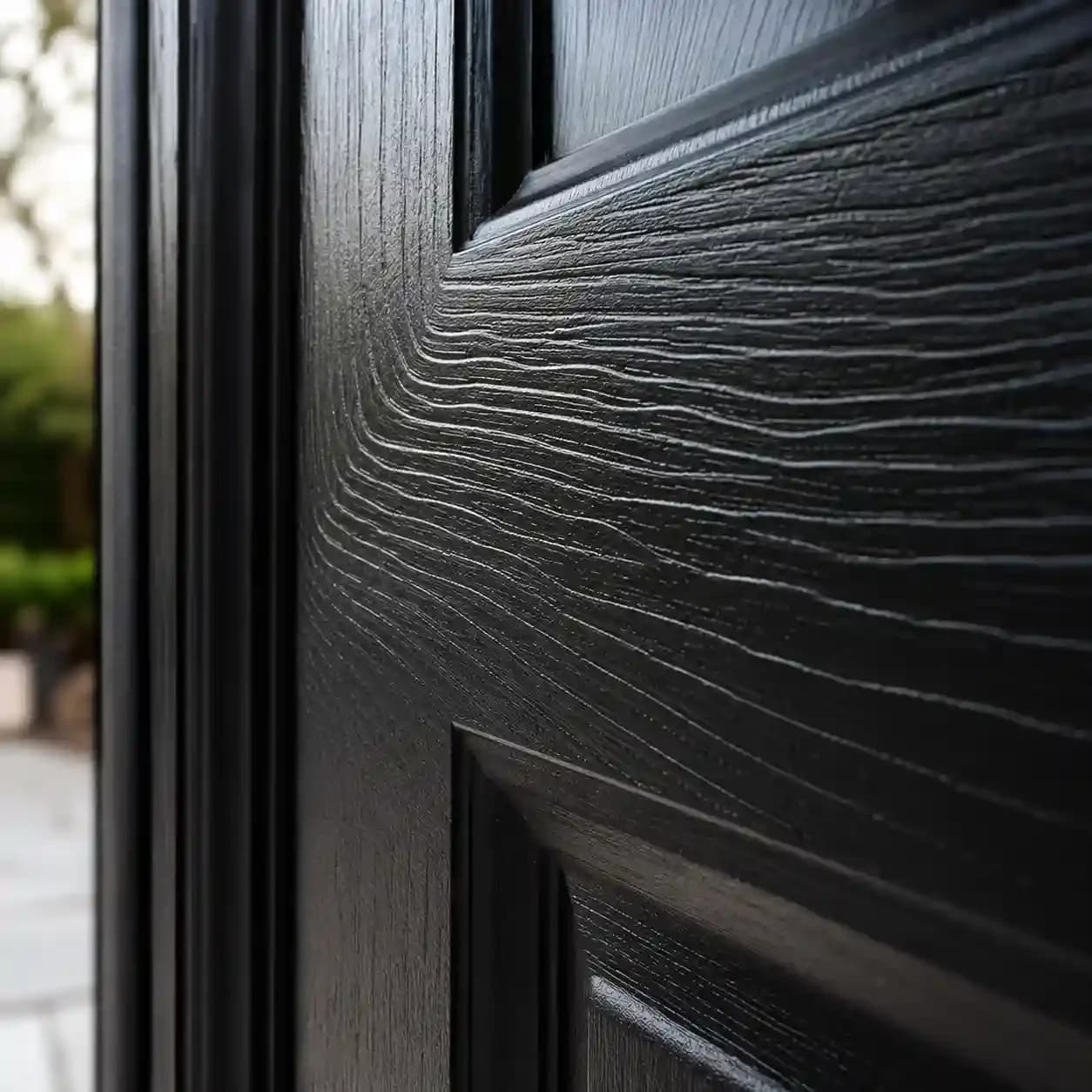
- The grain is moulded into the fiberglass skin, usually from a pattern taken from a real wood door. The colour comes from a stain or paint finish on top.
- Oak grain is bolder and more open, with cathedral patterns. Mahogany grain is typically straighter and finer. Smooth skins suit paint and very modern doors.
- A wood-tone stain shows the grain and colour variation. A solid colour keeps the texture but calms the look.
- How real it looks depends on grain depth, a low-sheen finish and how well the grain wraps around the panels. You can test all three with your fingertips.
- Fiberglass does not rot, warp or need sanding like wood, but the clear finish on top still faces the sun. Ask what finish system a door uses and how to care for it.
Wood grain fiberglass doors give you the look of oak or mahogany without the parts of wood that fail in an Ontario climate. Wood rots, swells and needs refinishing. Fiberglass does not. But not every wood grain fiberglass door looks the same, and the finish makes as much difference as the grain. This guide explains how the grain is made, how the styles differ, and how to tell a good one from a flat one.
We are EHI Custom Doors. We manufacture and install custom fiberglass front doors and back doors in oak grain, mahogany grain, smooth and solid colours, from our workshop in Whitchurch-Stouffville.
What a Wood Grain Fiberglass Door Is
A fiberglass door has two moulded skins over a foam core, set in a frame. On a wood grain door, the outer face of each skin is textured to look like wood. Our catalogue describes its oak and mahogany textured skins as "High Definition Panel Embossments" that give the look of a wood surface without the fading, rotting and warping of real wood. Our guides to the advantages of fiberglass doors and to fiberglass vs wood vs steel doors cover the construction and the comparison, so this guide sticks to the look.
How the Grain Gets Into the Skin
Fiberglass makers generally start with a real wood door. CompositesWorld describes the process this way: a door is first built in wood with the grain and panel shapes wanted, a silicone replica is taken from it, and that replica is used to make the metal mould. The skin material is then pressed in the mould, which carries the fine detail of the grain and the panel edges onto the surface. The maker's choice of master door, and how deep the mould cuts the grain, decide how convincing the result is.
Oak Grain, Mahogany Grain and Smooth
Our catalogue groups doors into three surface lines: oak grain (the WG models), mahogany grain (MAH) and smooth (SM). Here is how they compare.
| Surface | The look | Suits | In our catalogue |
|---|---|---|---|
| Oak grain | A bold, open grain with cathedral patterns and straight sections, and a hint of knots | Traditional, Craftsman, Colonial and farmhouse fronts | 6 Panel Craftsman, 3 Panel Arched, Curved 3 Panel, Executive Raised 2 Panel |
| Mahogany grain | Straighter, finer lines that typically take a deeper, redder tone | Traditional and transitional homes, and grooved modern slabs | Rustic Panel, and a flush 8-foot slab with grooves |
| Smooth | A clean surface with no grain | Painted doors and very modern designs | Smooth Craftsman, and modern glass-lite models |
Framewell notes that oak texture carries the cathedral and straight grain of real oak, works well on traditional homes such as Colonial and Craftsman, and can feel too traditional for minimal or ultra-contemporary fronts, where a smooth or tight grain suits better. Our guides to front door styles for your home and modern front door ideas show how each surface sits in each style.
Wood-Tone Stain or Solid Colour?
The texture is only half of the look. The other half is the finish on top, and you have two routes.
| Wood-tone finish | Solid colour | |
|---|---|---|
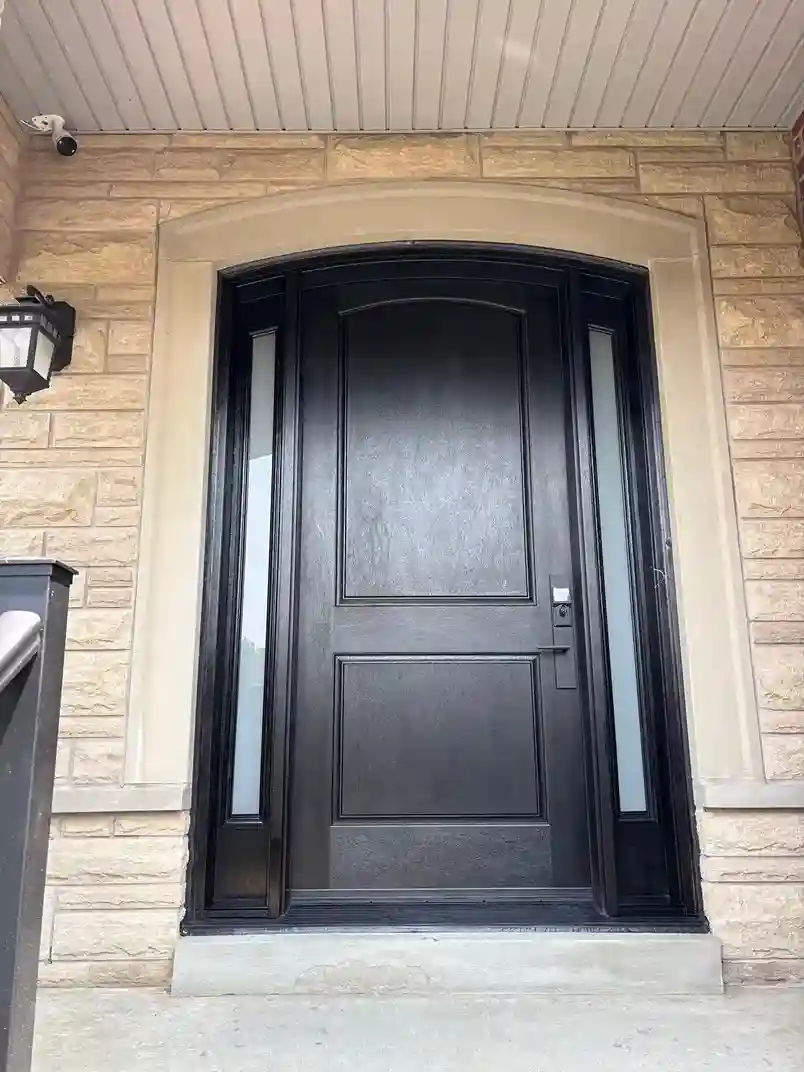
| What you see | Colour that varies across the grain, dark in the grain and lighter on the ridges | One even colour, with the texture showing as light and shadow |
| Best for | Brick, stone and traditional or Craftsman homes where warmth suits | Modern homes, bold statements and a clean, easy-to-match look |
| Colours we offer | Oak and mahogany wood tones, from natural oak to deep brown | Black, espresso, charcoal and grey |
| Watch for | Uneven fading on a sunny side over time | Very dark colours absorb more heat on a sunny face |
A wood-tone finish is usually built in layers. A pigmented gel stain is worked into the grain, then a clear topcoat is added to protect it. ZAR, a maker of stains and finishes, describes wiping the stain into the embossed grain and smoothing it in the direction of the grain, since fiberglass does not absorb stain the way wood does, then adding two thin coats of polyurethane, with an exterior-grade product that has UV inhibitors on sun-exposed doors. That work is why a good stained fiberglass door has depth and a poor one looks painted on. Our guide to front door colours covers how to pick a colour for your brick, stone and siding.
How Real Does It Look?
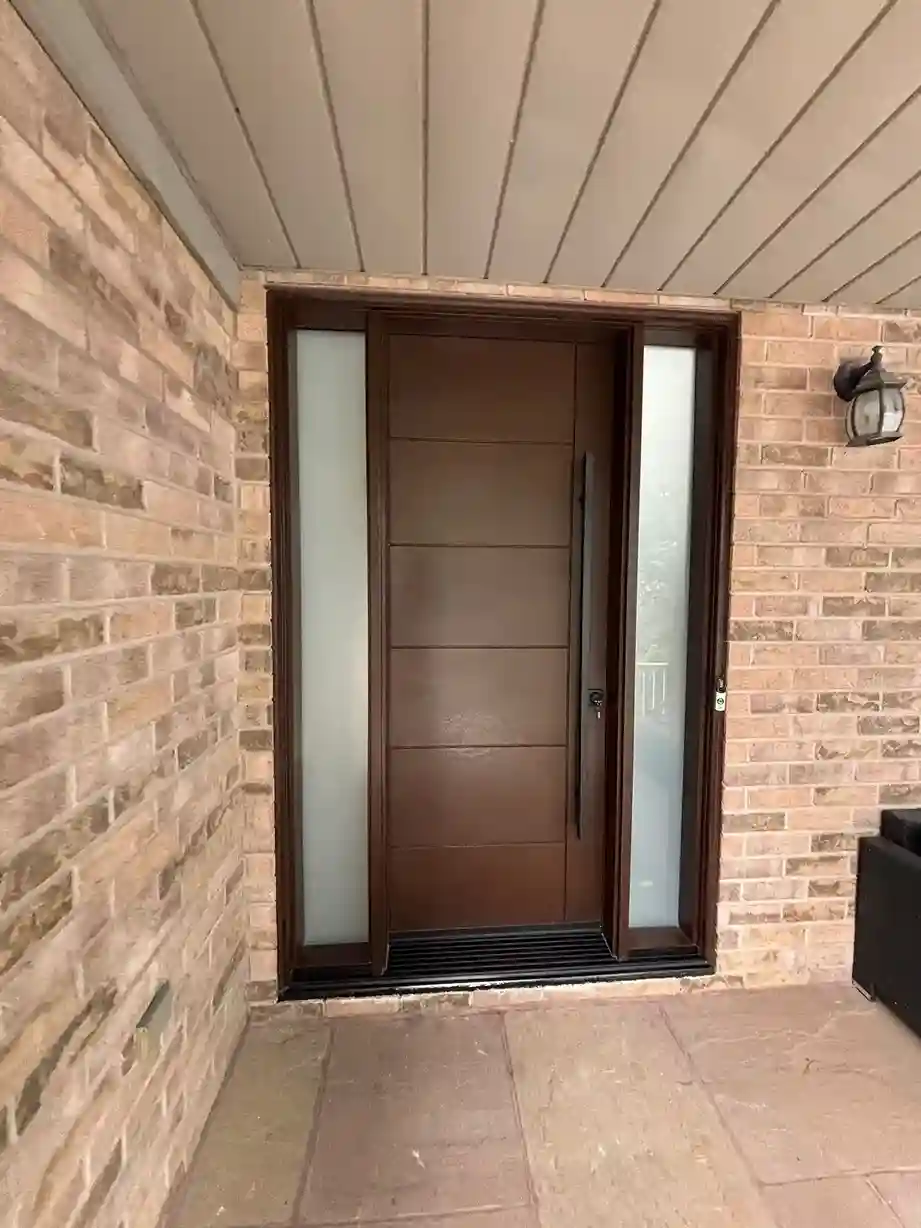
From the street, a good wood grain fiberglass door is hard to tell from wood. Up close, the differences are in a few details. Framewell lists what makes a faux wood door feel plasticky: shallow, repeating grain, a thick glossy coat, and thin or hollow-sounding construction. You can check for all of them.
- Run your fingertips along the rails and stiles. You should feel real ridges and valleys, not a faint pattern.
- Look at the sheen. A satin or low-gloss finish looks more like wood than a thick, glassy one.
- Check the edges. The grain should wrap around the panel profiles with crisp transitions.
- Knock near the lock. A solid, low thud is a good sign.
- Stand back three metres and look at the whole door in daylight, since that is how the street sees it.
Real wood does have a natural variation that no mould can copy. If that matters most to you, wood is still the material to choose, and our comparison guide is honest about the upkeep that comes with it. Most owners who choose fiberglass want the warmth of the look without the upkeep, and a good grain delivers that.
Sun, Fading and the Clear Coat
Fiberglass does not rot, swell or warp, so it skips the sanding and re-staining cycle that bare wood needs. Its colour finish does still face the sun. The clear topcoat is the layer that takes the UV. Framewell reports manufacturer guidance to refresh it about every two years on a somewhat shaded door and as often as every six months on a door in full sun. Those numbers come from guides written with hotter regions in mind, so treat them as a rule of thumb, but the principle holds: a covered porch and a light clean each year help any finish last longer. Our guide to fiberglass door care and maintenance has a year-round checklist.
Ask about the finish before you order
For any wood grain door from any maker, ask what finish system is used, how it holds up in direct sun and what care it needs. Our lifetime warranty covers the fiberglass only, meaning the slab, frame and brickmould. Hardware, glass and labour are not part of it, so treat the colour finish as something you look after.
Dark colours absorb more heat. The same source says fiberglass makers caution against black or very dark finishes on unshaded entries in hot climates, so if your door faces the afternoon sun with no cover, tell us when you request a quote. Our guide on when to replace an exterior door also lists the finish problems that are worth watching for.
Can You Paint a Wood Grain Fiberglass Door?
Yes, but ask the maker first. Painting brings a solid colour, and the texture stays as light and shadow. Guides for fiberglass doors generally call for a clean surface, a bonding primer where the maker advises one, and a 100 percent acrylic exterior paint in thin coats, and they warn against sanding textured skins. Our lifetime warranty covers the fiberglass only, so the finish is yours to look after. Ask us before you start, and let us tell you what suits your door. If you want a solid colour, the simplest route is to choose it when you order.
Matching the Grain Across the Entrance
The door is not the only part with a finish. The frame, brickmould, sidelights and transom show too, and they should read as one set. Our slab, frame and brickmould are all solid composite fiberglass, so they take the same finish. Our guides to sidelights and transoms, exterior door trim and brickmould and matching front and back doors show how to keep the grain and colour consistent from the front to the back of the house, and our front door hardware guide covers the metal finish that goes with a wood tone.
Wood tones suit older brick and stone streets especially well. If you live in an area such as Rosedale or the Annex, a wood-tone oak or mahogany grain is often a natural fit for the architecture.
Cost of a Wood Grain Finish
At EHI Custom Doors a custom fiberglass single door starts at $2,500 installed and a double door starts at $5,100 installed. Finish is one of the choices that changes the final price, along with glass, hardware, lock type and sidelights, so ask for a quote that shows your chosen surface. Our guide to custom exterior doors cost in Toronto explains each factor.
How to Choose
- Match the surface to the house. Oak grain for traditional and Craftsman, mahogany for a deeper tone or grooved modern slabs, smooth for painted or minimal doors.
- Pick the finish next. Wood-tone for warmth against brick and stone, solid colour for a clean, modern look.
- Look at your sun. A door on a south or west face with no cover needs a more careful choice of colour and finish.
- Check the details. Grain depth, low sheen, wrapped edges and a solid knock.
- Ask about care. Get the finish system and care advice in writing.
Get a Quote for a Wood Grain Door
Browse the door catalogue and photos of doors we have installed to see oak grain, mahogany grain and smooth finishes in real homes, and read what customers say on our reviews page. Then send photos of your entrance. Call EHI Custom Doors at 647-952-2311 or request a quote. We are open Monday to Sunday, 9 AM to 5 PM, and there is no pressure to book on the spot.
Wood grain fiberglass doors work best when you choose the grain, the finish and the care plan together. Pick the surface that suits your house, test the details with your fingertips, and ask how the finish will hold up on your porch.
Frequently Asked Questions
What is a wood grain fiberglass door?
It is a fiberglass door whose outer skin is moulded with a wood texture, usually taken from a real wood door, and finished with a stain or paint. It gives the look of oak or mahogany without rot, warping or regular refinishing.
Does a wood grain fiberglass door look like real wood?
From the street, a good one does. Up close, check for deep grain you can feel, a low-sheen finish, grain that wraps around the panel edges and a solid knock. Real wood still has a natural variation no mould can copy.
What is the difference between oak grain and mahogany grain?
Oak grain is bolder and more open, with cathedral patterns. Mahogany grain is typically straighter and finer with a deeper, redder tone. Both are available in our catalogue, along with smooth surfaces.
Are wood grain fiberglass doors stained or painted?
Wood-tone doors are typically finished with a pigmented stain worked into the grain and a clear protective topcoat. Solid colours are painted. We offer both wood-tone and solid colours such as black, espresso, charcoal and grey.
Can I paint a wood grain fiberglass door?
Yes, but ask the maker first. Our lifetime warranty covers the fiberglass only, and the finish is yours to look after. Guides generally call for a clean surface, a bonding primer where advised and 100 percent acrylic exterior paint in thin coats. The simplest route is to choose your colour when you order.
Do wood grain fiberglass doors need refinishing?
They skip the sanding and re-staining that bare wood needs, but the clear topcoat still faces the sun. Some suppliers advise refreshing it every couple of years on a shaded door and more often in full sun, so ask your maker for care advice.
Is a wood grain fiberglass door better than a real wood door?
For most Ontario homes, fiberglass is the lower-upkeep choice, because it does not rot, swell or warp. Our catalogue states that its foam core gives about six times the insulation of a traditional wood door. Wood still wins for natural variation and the feel of the real thing.
How much does a wood grain fiberglass door cost?
At EHI Custom Doors a custom fiberglass single door starts at $2,500 installed and a double door starts at $5,100 installed. Finish, glass, hardware, lock type and sidelights change the final price.
Ready to See Real Pricing for Your Home?
Explore the pages below or request a free quote and we will get back to you with an accurate number.