
Design Guides
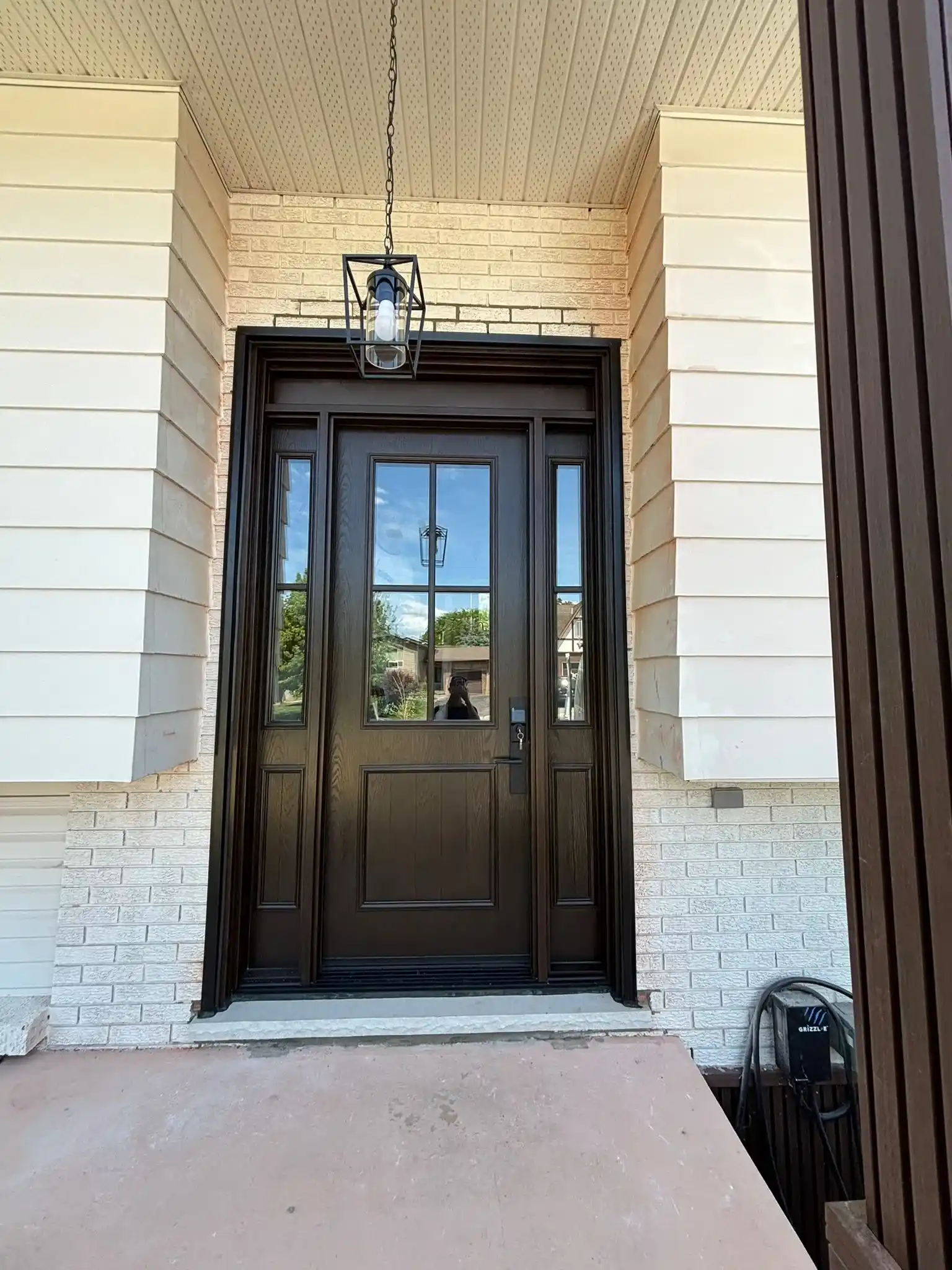
Exterior Door Trim and Brickmould: What It Is, What It Does and How to Choose
The trim around a door finishes the edge and keeps water out. Here is what brickmould is, how it compares with wide, slim and no trim, and what to choose for brick, stone, stucco and siding.
By EHI Custom Doors
Key Takeaways
- Brickmould is the exterior casing between the door frame and the brick, siding or stucco. It seals that gap and finishes the edge of the door.
- Options include traditional brickmould, wider casing (classic profiles run about 3 to 5 inches), slim flat trim (about 2 inches) and trimless doors, which need very tight construction.
- Wood trim can rot. Composite and fiberglass trim do not. Our brickmould is solid composite fiberglass and part of the door set.
- Worn or cracked trim and dried-out caulk let water behind the frame, so trim is part of the frame question.
- Match the trim to the cladding and the style of the house, and keep its colour consistent with the frame.
Exterior door trim is easy to overlook until it fails. It is the band around the door that finishes the edge, hides the gap between the frame and the wall, and helps keep water out. This guide explains what brickmould is, compares the trim options, and shows how to match trim to brick, stone, stucco and siding.
We are EHI Custom Doors. We manufacture and install custom fiberglass front doors and back doors, and our slab, frame and brickmould are all solid composite fiberglass.
What Exterior Door Trim Does
- Covers the gap between the door frame and the wall
- Gives a place to seal against the weather
- Finishes the edge of brick, stone, stucco or siding
- Frames the door and sets the style of the entrance
Brickmould: What It Is
Angi describes brickmould as a type of exterior casing that surrounds a door unit, installed between the door frame and the home's siding, brick or stucco. It is named for a time when many houses were brick and the trim covered the gap between the frame and the masonry. Modern brickmould is made of wood, composite or vinyl, and it is usually a moulded profile with a shaped face and a rebate that meets the wall.
Trim Options at a Glance
| Option | The look | Best for | Watch for |
|---|---|---|---|
| Brickmould | A moulded, traditional casing around the frame | Brick and masonry homes, and traditional or transitional styles | Its condition, since worn brickmould lets water behind the frame |
| Wide casing | A broader flat or profiled trim, classic widths of about 3 to 5 inches | Colonial, Craftsman and traditional entrances | Needs wall space on both sides |
| Slim flat trim | A clean, square-edged band of about 2 inches | Modern and minimalist homes | Sealing needs to be neat, since there is less trim to hide behind |
| Trimless | Cladding runs right up to the frame with a thin reveal | New modern builds and deep renovations | Very tight tolerances and little room to seal or adjust later |
Framewell points out that without casing there is no wide, forgiving surface to run a bead of sealant and hide rough cladding cuts, and it suggests a slim square-edged profile of about 2 inches as a compromise for modern looks. That is the practical reason most homes keep some trim.
Trim for Your Wall Material
| Wall | What the trim does | Note |
|---|---|---|
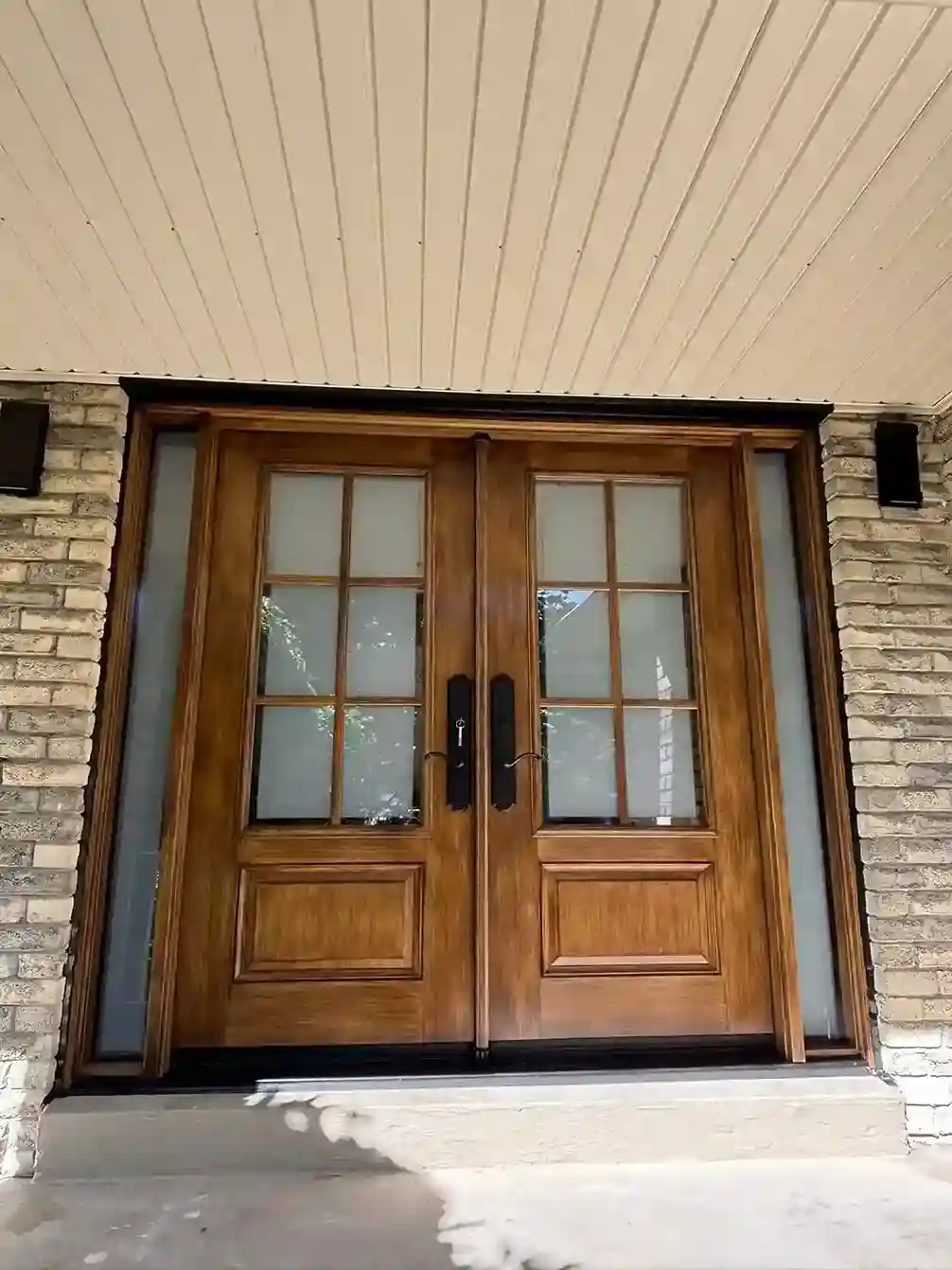
| Brick | Covers the gap between the frame and the masonry | Brick openings also need flashing above and a way for water to drain |
| Stone | Finishes the edge against a thick, irregular surface | Allow for the depth of the stone return |
| Stucco | Protects the edge and gives a clean line | Stucco edges need proper flashing and stops |
| Siding | Covers the cut ends of the siding | Keep a sealed joint where the siding meets the trim |
Materials: Wood, Composite and Fiberglass
Wood trim looks traditional, and it rots where water sits, so it needs regular sealing and paint. Composite, PVC and vinyl trim do not rot. Ours is solid composite fiberglass, the same as the slab and the frame, so no part of the set rots. Our guide to the advantages of fiberglass doors explains the construction, and our guide to fiberglass vs wood vs steel doors compares the materials.
Proportion and Style
Trim should suit the house. Wider, profiled casing suits Colonial, Craftsman and traditional fronts. Slim flat trim suits modern doors. Trimless is a specialist choice for very clean modern walls. Our guides to front door styles for your home and modern front door ideas show how trim fits each look.
Colour and Finish of the Trim
Keep the trim colour consistent with the frame, since the two read as one. Some homes match the trim to the door for a graphic look, and others match it to the wall so it blends in. Our guide to front door colours covers undertones and testing, and it is worth asking what finish the brickmould comes in on any door you order.
Water: Flashing, Caulking and Gaps
Trim is a weather barrier as much as a decoration. Good practice includes flashing at the head, jambs and sill, a drip cap above the head trim to shed water running down the wall, and sealant where the trim meets the wall. Cracked caulk, gaps against the wall and trim that is pulling away let water get behind the frame, and that is how frames rot. Check them each year, and read our guide on when to replace an exterior door if you see stains or soft spots.
Replacing Brickmould With the Door
Brickmould that is cracked, rotted or pulling away is a sign the frame may be next. When a frame needs replacing, the trim comes with the new set. Our guide to replacing a front door and frame shows how to test the frame, and our front door sizes guide shows how to measure, including the trim.
Trim on Heritage Homes
On a designated home or in a Heritage Conservation District, the trim profile can be part of what the City reviews with the door. Ask Heritage Planning before you order, and see our notes on Toronto permit and heritage rules and our guide to heritage home door replacement.
Get a Quote for a Complete Door Set
Send photos of the whole entrance, including the trim and the wall around it. Call EHI Custom Doors at 647-952-2311 or request a quote. We are open Monday to Sunday, 9 AM to 5 PM, and there is no pressure to book on the spot. Browse the door catalogue and photos of doors we have installed, or read our reviews.
Exterior door trim and brickmould are the quiet parts of a door that decide how well it lasts. Choose a profile that suits the house, choose a material that will not rot, and keep the seal against the wall in good shape.
Frequently Asked Questions
What is brickmould on a door?
Brickmould is the exterior casing between the door frame and the brick, siding or stucco. It seals that gap and finishes the edge of the door. Ours is solid composite fiberglass and part of the set.
Do I need brickmould on my exterior door?
Most homes keep some exterior trim, because it covers the gap and gives a place to seal. Trimless doors are a modern choice and need very tight construction and careful flashing.
How wide should exterior door trim be?
Classic casing profiles run about 3 to 5 inches wide, and slim modern trim is about 2 inches. Choose a width that suits the house and the wall space around the door.
What is the best material for exterior door trim?
Composite, PVC and fiberglass do not rot. Wood looks traditional but rots where water sits, so it needs regular sealing and paint.
How do I know if my door trim needs replacing?
Look for cracks, rot, gaps against the wall, dried-out caulk, and stains or soft spots on the frame. When the frame needs replacing, the trim comes with the new set.
Should the trim match the door or the wall?
Keep it consistent with the frame. Matching the trim to the door gives a graphic look, and matching it to the wall makes it blend in.
Does brickmould come with your doors?
Yes. In an EHI door the slab, frame and brickmould are all solid composite fiberglass, built as a matched set.
Does the trim affect measuring for a new door?
Yes, so include it in your photos. Our installer takes the final measurements after you approve the quote, and our front door sizes guide shows how to measure the opening.
Ready to See Real Pricing for Your Home?
Explore the pages below or request a free quote and we will get back to you with an accurate number.