
Planning Guides
Heritage Home Door Replacement in Toronto: Permits, Heritage Planning and What to Bring
If your home is designated, sits in a Heritage Conservation District or is on the City's Heritage Register, a new door may need approval first. Here is how the process works, what Heritage Planning looks at and how to prepare.
By EHI Custom Doors
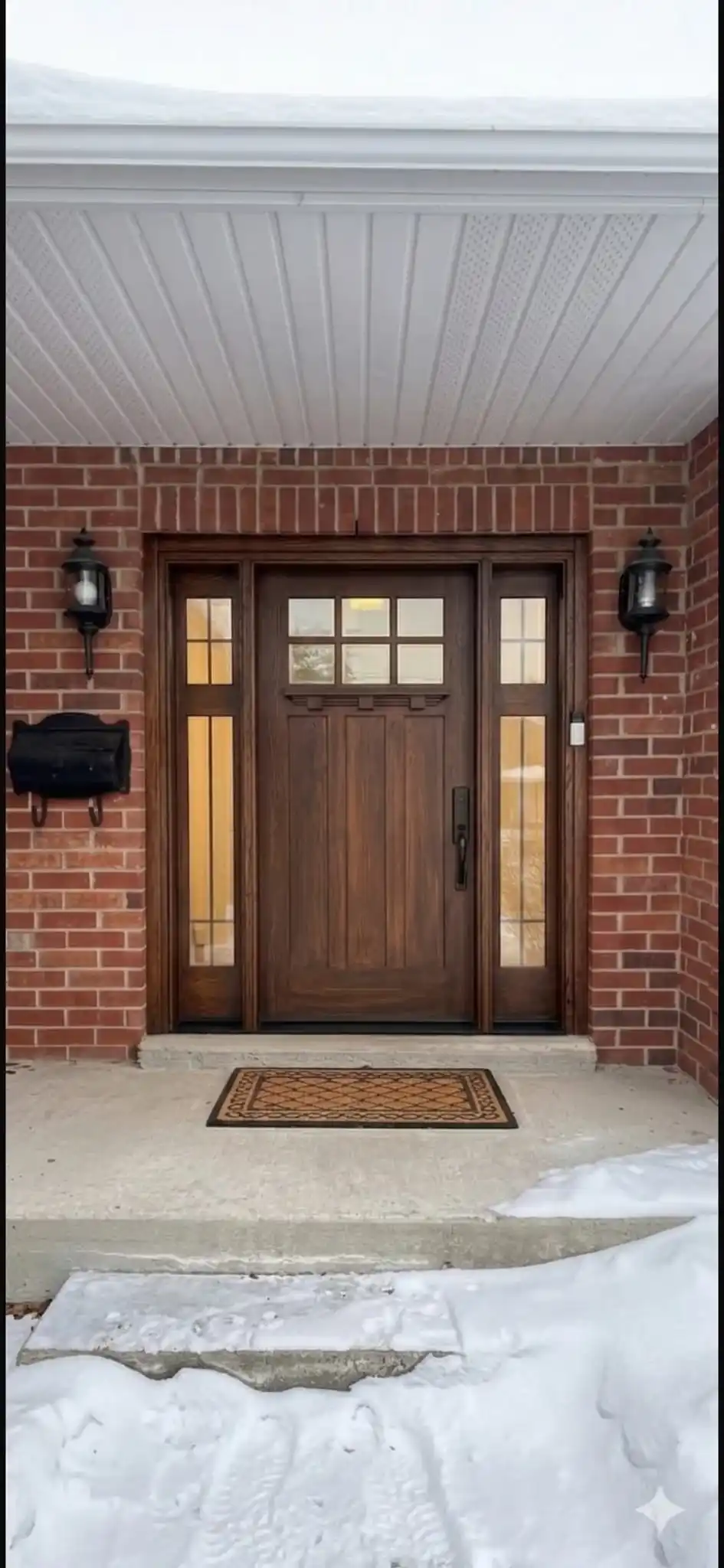
Key Takeaways
- Check your property's status first. Designated (Part IV), inside a Heritage Conservation District (Part V) and merely listed on the Heritage Register are treated differently.
- In a Heritage Conservation District, replacing a door that is visible from the street needs a heritage permit. Interior changes, changes not visible from the street and routine painting do not.
- Heritage policy favours repair first and, where replacement is needed, a new door that matches the original in form, materials and detail. Whether a fiberglass door with a wood-grain finish is accepted is Heritage Planning's call.
- We manufacture custom fiberglass doors and do not repair old doors. We would rather you check with the City before you order than after.
- Bring photos, measurements and the design of the original door to any conversation with Heritage Planning or with us.
Heritage home door replacement in Toronto starts with a question that has nothing to do with doors: what is your property's heritage status? The answer decides if you can simply order a door, need a heritage permit first, or need to talk to the City about the design. This guide explains the categories, what Heritage Planning reviews, how the process runs, and what to bring so the conversation goes smoothly.
We are EHI Custom Doors. We manufacture and install custom fiberglass front doors and back doors. We are not heritage consultants, and the City decides what is approved. Treat this guide as a map of the process, and confirm every point with Heritage Planning.
Step One: Find Out Your Property's Heritage Status
The City's Heritage Permit Guide says to check the Heritage Register map or tool. It shows if a property is individually designated under Part IV of the Ontario Heritage Act. It also shows if the property is inside a Heritage Conservation District under Part V, or is listed but not designated. The City's Heritage Register page calls its Heritage Property Search tool the most up-to-date way to confirm a property's status.
| Status | What it means | For a door replacement |
|---|---|---|
| Part IV, individually designated | A by-law registered on title protects the property's heritage attributes | Permission is required for work that alters a building. Confirm with Heritage Planning if your door is covered. |
| Part V, in a Heritage Conservation District | A neighbourhood is protected by a City by-law, with area guidelines | Replacing a door visible from the street needs a heritage permit, handled with the building permit application. |
| Listed, not designated | The property is on the Register, and the City has time to consider designation | Few restrictions. The main requirement is 60 days' notice before demolition or removal of a structure. |
| Not on the Register | No heritage rules apply | The usual rules apply. See our notes on Toronto permit rules. |
The City states that listing does not let it withhold a building permit for work that is not demolition. Listing also does not stop renovation. If your home is only listed, a door replacement is usually not the issue. Confirm that with the City.
Toronto's Heritage Conservation Districts
The City's page on Heritage Conservation Districts says 27 districts have been designated since 1985. Districts in effect include Cabbagetown, Rosedale (North and South), East Annex, Madison Avenue/West Annex, Riverdale, Harbord Village, Yorkville-Hazelton, Wychwood Park, Kensington Market, King-Spadina, Parkdale Main Street and Teiaiagon-Baby Point, among others. Parts of Rosedale and the Annex are in districts, so owners there should check before ordering. Each district has its own plan and guidelines.
What Heritage Planning Reviews
The City's guide says heritage drawings must show changes to external doors, windows, exterior trim, porches and other parts of the exterior. In a Heritage Conservation District, the City's FAQ says a heritage permit is needed for additions, alterations and demolition. It is not needed for interior changes, exterior changes that cannot be seen from the street, or routine maintenance such as painting. You are never required to replace existing windows and doors. If you choose to replace those visible from the sidewalk, you need a heritage permit.
- The size, proportions and placement of the door and its opening
- The panel layout, glass and any transom or sidelights
- The material and finish, and how closely they match the original
- The trim, hardware and colour where they are visible from the street
The Cabbagetown heritage committee lists repairing or replacing windows and doors as work that needs a heritage permit. It adds that staff will speed up the heritage and building permits if an application follows the guidelines in the district plan. The South Rosedale residents' association says the same of removing and replacing original windows and doors. It adds that changes are encouraged to return to the building's original look.
How the Process Runs
- Confirm your status with the Heritage Property Search tool.
- Contact Heritage Planning early, before you choose or order a door.
- Prepare drawings and photos of the existing door and the proposed one.
- In a district, submit the work with your building permit application. Heritage Planning reviews at the same time. For an individually designated property, apply for permission to alter.
- Wait for approval before you order and install.
The City's 2018 FAQ said district heritage permits are free and handled with the building permit, so only one application is needed. It put the average review at three days. That is a 2018 figure, so ask for current timing. For individually designated properties, the Heritage Permit Guide says decisions come within 90 days of a notice of complete application. Some go to City Council, so leave time.
Order after approval, not before
A custom door is built to one opening and one design. If you order before Heritage Planning has approved the design, you may have a door you cannot install. We build custom doors from a confirmed order, so get the approval first.
Repair First, Replace When You Must
Heritage practice starts with repair. The Standards and Guidelines for the Conservation of Historic Places in Canada say to repair rather than replace character-defining elements. If a part is too worn to repair, replace it with new elements that match the forms, materials and detailing of sound versions of the same elements. The City's Heritage Grant Program follows the same idea. It covers the repair of original windows and doors. It also covers replacement windows that match the original details when the originals cannot be repaired and there is documentation. It is open to properties designated under Part IV or Part V, with one grant per property every five years. Check the page for current rules and whether a replacement door qualifies.
We replace doors and do not repair them. If your original door can be saved, a heritage carpenter is the right call, and it is worth having one look at it before you decide. If it cannot be saved, a well-documented replacement is the next step, and that is where we can help.
The Material Question
This is the honest part. Heritage policy leans toward matching the original materials, and many heritage homes have wood doors. We build fiberglass. Our oak and mahogany grain finishes look like wood from the street, and our guide to wood grain fiberglass doors shows how. But Heritage Planning decides if a fiberglass door is accepted on your home, based on your property and your district's guidelines. We cannot promise approval. If your district requires wood on street-facing doors, we are not the right supplier, and we would rather tell you now.
What We Can Match on an Older Home
Older houses rarely have standard openings. Brick settles and frames go out of square. Sizes are not the ones sold in a store. We manufacture every door in our workshop in Whitchurch-Stouffville, including odd or non-standard sizes, and we build to your measured opening. Our catalogue includes panel layouts, arched and curved models and custom glass. That means we can often follow the size and general layout of an original door. Send us photos and measurements and we will tell you what we can match and what we cannot.
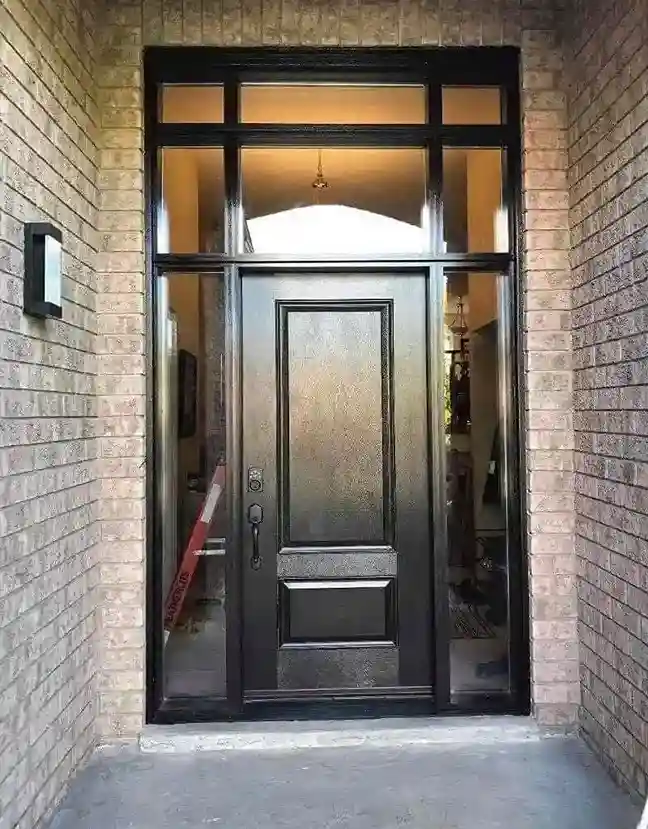
Our guides to front door styles for your home, sidelights and transoms, arched and custom-shaped doors and exterior door trim and brickmould cover the details that matter on an older entrance. Our guide to front door colours covers colour. Our guide on custom doors vs stock doors explains why a made-to-measure door fits an older opening better.
What to Bring to Heritage Planning and to Us
- Photos of the whole front of the house, with the door in context
- Close-ups of the door: panels, glass, hardware, hinges and the trim around it
- Measurements of the opening and of the door, if you can take them
- Any old photos that show the original door
- The heritage designation by-law or district guidelines, if you have them
- The design you are considering, such as a catalogue model or a sketch
Cost
At EHI Custom Doors a custom fiberglass single door starts at $2,500 installed and a double door starts at $5,100 installed. Custom shapes, sidelights, transoms and glass designs change the final price, and a frame that needs replacing adds to it. Our guide to custom exterior doors cost in Toronto explains each factor.
Talk to Us Once You Know What the City Needs
Browse the door catalogue and photos of doors we have installed, then send photos of your entrance. Call EHI Custom Doors at 647-952-2311 or request a quote. We are open Monday to Sunday, 9 AM to 5 PM, and there is no pressure to book on the spot. You can read what customers say on our reviews page.
Heritage home door replacement goes smoothly when you check your status, talk to Heritage Planning before you order and bring good photos. Start there, and the door itself becomes the easy part.
Frequently Asked Questions
Do I need a permit to replace a door on a heritage home in Toronto?
It depends on the property's status. On a Part IV designated property, permission is required for work that alters a building. In a Heritage Conservation District, replacing a door visible from the street needs a heritage permit. A property that is only listed has few restrictions. Confirm with Heritage Planning.
How do I find out if my home is a heritage property?
Use the City of Toronto's Heritage Property Search tool or the Heritage Register map. They show whether a property is designated under Part IV, in a Heritage Conservation District under Part V, or listed.
Can I replace my heritage front door with a fiberglass door?
It depends on your property and your district's guidelines. Heritage policy favours matching the original materials, so Heritage Planning decides whether a fiberglass door with a wood-grain finish is acceptable. We cannot promise approval, so check before you order.
Do I have to replace my old door if my neighbourhood is designated?
No. The City's FAQ says you are not required to replace existing windows and doors when a district is designated. If you choose to replace those visible from the sidewalk, you need a heritage permit.
How long does a heritage permit take in Toronto?
The City's 2018 FAQ said the average review in a district was three days, and that heritage permits there are free and handled with the building permit. For individually designated properties, decisions are made within 90 days of a complete application. Ask for current timing.
Can you repair my old wood door?
No. We replace doors and do not repair them. If your original door can be saved, ask a heritage carpenter to look at it first. If it cannot, a well-documented replacement is the next step.
Is there a grant for heritage door work?
The Toronto Heritage Grant Program covers the repair of original windows and doors, and matching replacements where originals cannot be repaired, on properties designated under Part IV or Part V. Check the City's page for the current rules and whether a replacement door qualifies.
How much does a custom door for an older home cost?
At EHI Custom Doors a custom fiberglass single door starts at $2,500 installed and a double door starts at $5,100 installed. Custom shapes, glass, sidelights and a new frame change the final price.
Ready to See Real Pricing for Your Home?
Explore the pages below or request a free quote and we will get back to you with an accurate number.